


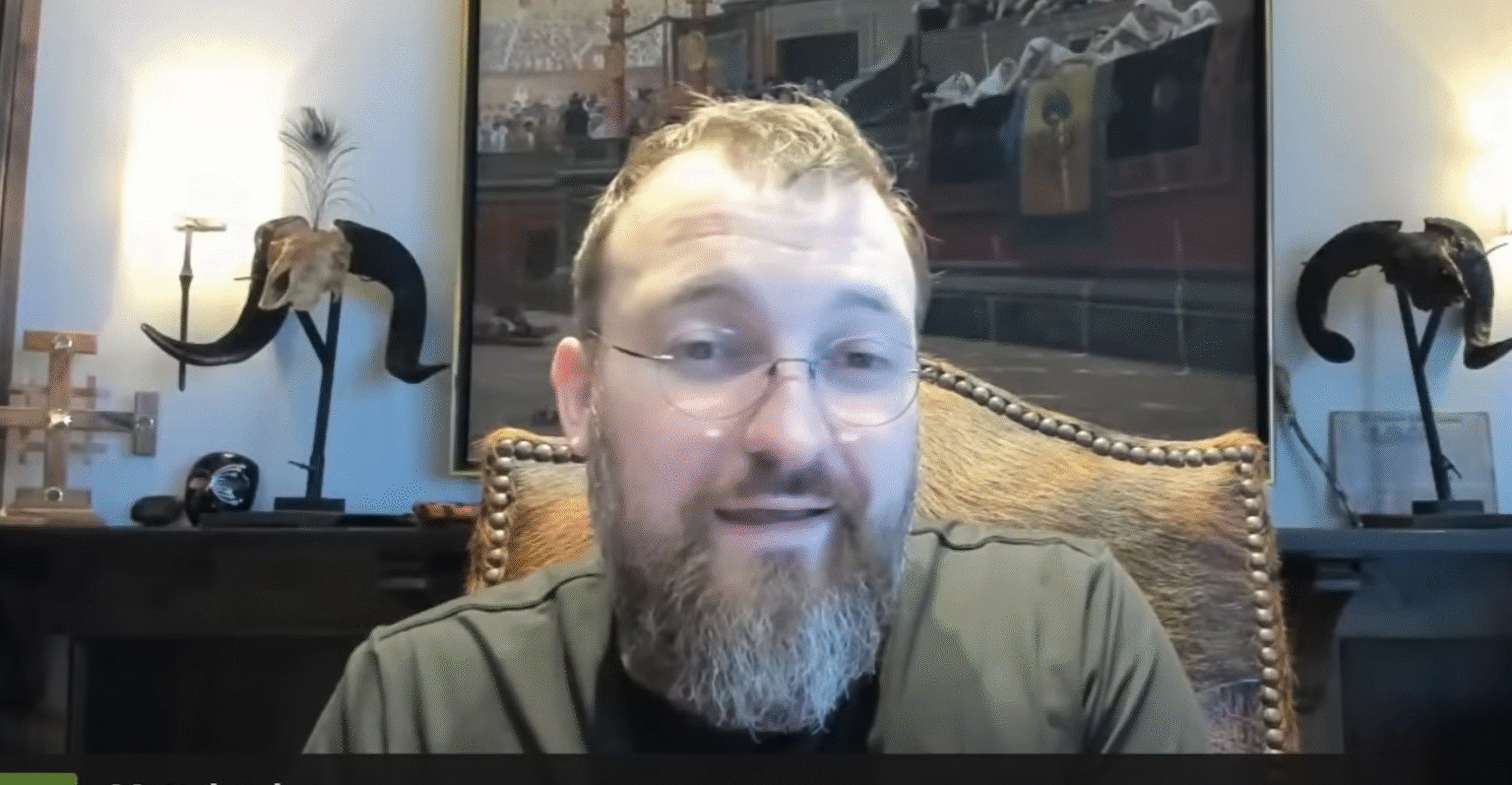
Charles Hoskinson’s latest two-hour Ask-Me-Anything on May 24 ranged from personal anecdotes to quantum-era thought experiments, yet the Cardano founder kept circling back to a single theme: the network must evolve—technically and politically—if it is to compete in an age of zero-knowledge, AI-assisted finance.
Early in the broadcast, Hoskinson sketched an audacious testing ground for that evolution: a fully simulated “crypto city” populated by AI agents. “Why don’t you create a virtual city,” he asked, “and then you introduce crypto into the city … you just see all the transactions that go through and what happens with it.” In his scenario, private stablecoins, roll-ups and even illicit actors interplay inside a sandbox large enough to stress Cardano’s forthcoming privacy layer, Midnight, and its recursive-proof scaling stack. The experiment, he argued, would let developers “stop thinking of TPS and start thinking of … concurrent cities processing.”
That urgency also framed his call for faster finality. Cardano’s base protocol, Ouroboros, deliberately mirrors Bitcoin’s probabilistic security, but Hoskinson said the time has come for a BFT-style add-on. Ouroboros Paris, a finality gadget written by “Agalos and the team of Gigabrains,” would let partner chains settle to Cardano “in minutes” rather than the current half-day. He lamented pushback from engineering committees that repeatedly removed Paris from the official roadmap: “I will pay out of my own pocket to have Ouroboros Paris,” he said, describing the proposal’s journey through Intersect—the member-run body that now stewards Cardano’s codebase.
Technical privacy surfaced again when an audience member asked whether the long-dormant Crypsinous paper—private staking for Ouroboros—should be revived. Hoskinson acknowledged its conceptual elegance but cautioned that full anonymity would “take a big hit” on performance and complicate multi-resource consensus. Any resurrection, he said, would need to marry new zero-knowledge primitives with the emerging, multi-ledger world Cardano now targets.
Still, the founder’s tone was more determined than defensive. He framed every grievance—whether about “gridlock,” misaligned incentives or public defamation—as a data point in how decentralised systems mature. “We have the right to rewrite the economic, political, and social systems of the world,” he said, linking Cardano’s ethos to his childhood fixation on unfinished games and four-dimensional puzzles: “If it’s not good enough for you, how could you possibly say it’s good enough for everybody else?”
For now, Hoskinson’s own puzzle pieces are clear: bring fast finality to the mainnet, launch Midnight’s selective-disclosure toolkit, revive research threads like Kronos under a more decisive governance model, and test it all inside a living simulation where AI agents behave like citizens and criminals alike. Whether the ecosystem can align behind that blueprint—or whether the very lack of an “executive” will keep the tiles mis-matched—now falls to the Cardano community he insists must learn to act as a nation, not a forum.
At press time, ADA traded at $0.769.






