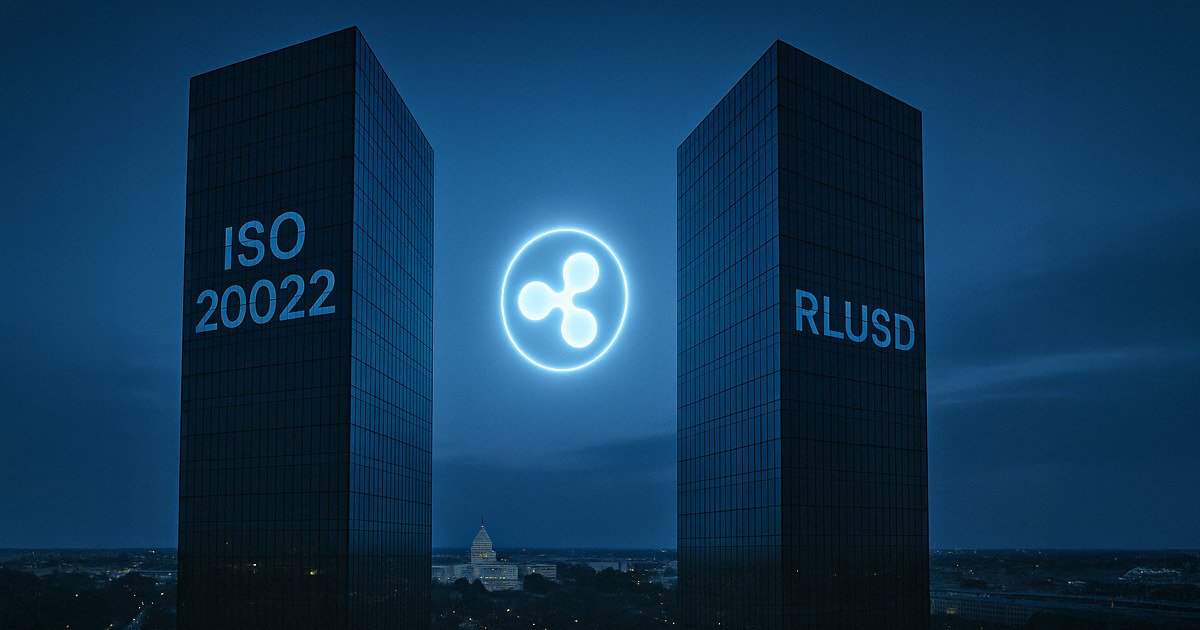
Ripple is executing a sophisticated, multi-front global strategy yielding significant results and positioning the company for major infrastructure and market-share gains.
The moves paint a picture of a company decisively moving beyond its past legal challenges into a new phase of global execution.
On the U.S. front, the long-awaited transition of the Fedwire Funds Service to the ISO 20022 global messaging standard officially took place on July 14. The upgrade is a monumental shift for the U.S. financial system, as it standardizes the data structure for trillions of dollars in daily interbank transfers, enabling richer data, fewer errors, and improved efficiency for cross-border payments. Ripple anticipated this shift, becoming the first blockchain-focused company to join the ISO 20022 Standards Body back in 2020.
As a result, its global payment platform, RippleNet, is already fully compliant with the new standard, positioning Ripple as a prime technology partner for financial institutions seeking to leverage blockchain-based settlement within the newly upgraded Fedwire system.
For instance, institutions using Volante Technologies’ cloud-based Fedwire-as-a-Service can now select XRP as a settlement mechanism, creating a direct pathway for institutional adoption. The market has taken notice of this strategic victory, with the news coinciding with a price surge past the $3 threshold and a notable increase in accumulation by whale wallets. The price has since retraced to $2.87 as Bitcoin pulled back from yesterday’s price discovery.
Simultaneously, on the European front, Ripple is laying the groundwork to capture the stablecoin market under the EU’s comprehensive Markets in Crypto-Assets (MiCA) regulation. Ledger Insights broke news that the company plans to launch its RLUSD stablecoin across Europe by establishing a licensed Electronic Money Institution (EMI) in Luxembourg.
While geographically separate, these two developments are two sides of the same coin: a coherent global strategy. Ripple’s success with ISO 20022 is a victory for its “picks and shovels” approach.
Rather than attempting to disrupt and replace legacy financial systems, Ripple integrated with and enhanced them. By investing in compliance with the upgraded financial plumbing years in advance, the company has now become a go-to service provider for the modernized system.
However, the “Guiding and Establishing National Innovation for U.S. Stablecoins Act of 2025,” or GENIUS Act, is on the cusp of becoming law, pending a final vote in the U.S. House of Representatives and the President’s signature. The bill aims to create a comprehensive regulatory framework for stablecoins, which would give Ripple clarity for RLUSD in the States.
The GENIUS Act must pass the House of Representatives vote before it becomes law. Following passage by the House, the bill will be sent to the President for his signature. Once the President signs it, the GENIUS Act will officially become law.
Given the current legislative calendar and the stated focus on cryptocurrency-related bills, the final passage of the GENIUS Act could be imminent.