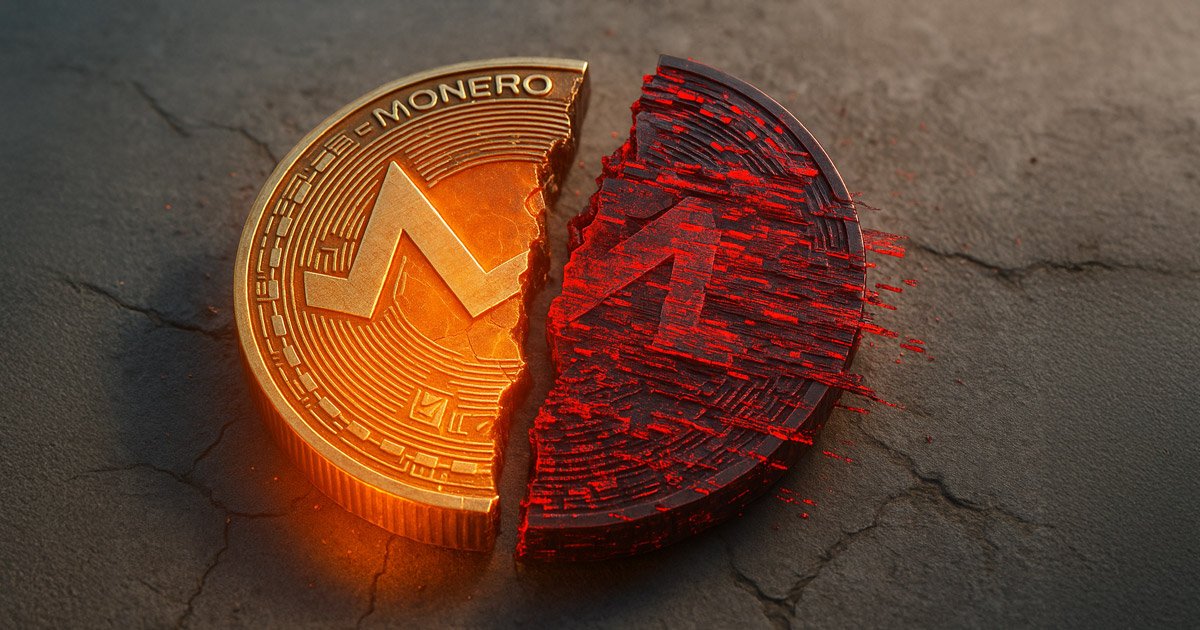
“Looks like Qubic has achieved 51% over Monero, we are waiting for independent confirmations.”
He noted:
“Other miners are left with no incentive to continue, as Qubic can simply orphan any competing blocks, effectively becoming the sole miner.”
He warned that the group’s dominance could enable large-scale blockchain rewrites, double-spending, and transaction censorship.
Guillemet estimated the operation costs around $75 million per day but noted it could still be profitable, at least in the short term.
The Ledger CTO concluded that the attack had allowed a smaller chain to overtake a top 30 crypto tokens. He wrote:
“In effect, a $300 million market-cap chain is taking over a $6 billion one. Monero’s options for recovery are limited, and a full takeover is now possible and even likely.”
However, CFB claimed that the takeover of the privacy-focused network was designed to prepare it against future attacks of such nature.
According to him:
“The Monero team is polishing details of their 51% attack protection. Many accused us of being sponsored by 3-letter agencies to attack this anon coin. What do you think now, after we has helped Monero to prepare for its future fights against those agencies.”
By offering significantly higher payouts than regular Monero mining pools, the Monero mining pool attracted enough participants to surpass the 51% threshold.
Meanwhile, Qubic’s model also involves distributing half its mining profits to participating miners and using the other half to purchase and burn QUBIC tokens.
So, if the project mines 100% of Monero’s daily blocks, it yields around 432 XMR, worth approximately $118,000 at current prices, with $59,000 burned daily.