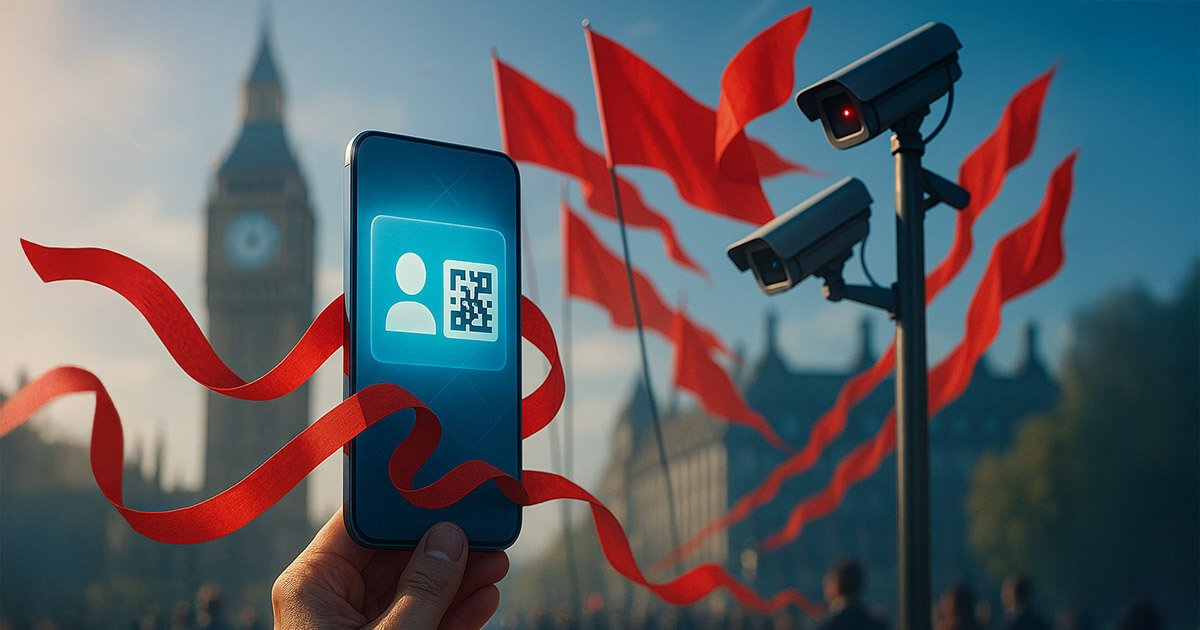
“You will not be able to work in the United Kingdom if you do not have a digital ID. It’s as simple as that.”
Starmer pitched the digital ID scheme as an “enormous opportunity for the UK”: a solution to illegal immigration and a way to ensure strong border controls. The new digital ID system will store personal details, such as name, date of birth, photograph, nationality, and residency status, on an individual’s mobile device.
Interacting with employers and public services will become a process akin to contactless payments or existing NHS digital apps. While officials assure that the IDs will not have to be carried or presented on demand, they will be mandatory for anyone seeking legal work before the end of the current parliament, anticipated by 2029.
Big Brother Watch and other advocacy groups have accused the scheme of establishing a “checkpoint society” that is “wholly un-British,” warning that it represents a step toward domestic surveillance and digital control never previously seen in the UK.
“This is an affront to our civil liberties, and will make the lives of minorities even more difficult and dangerous. It is excessive state interference — and must be resisted.”
Critics argue that once introduced, digital credentials risk becoming prerequisites for accessing everything from benefits and healthcare to online services, echoing China’s expansion of internet IDs to monitor daily activities.
The policy’s potential to transform the UK from a nation where citizenship rarely demands proof into one where digital verification becomes routine has fueled analogies with Orwellian surveillance and a loss of individual autonomy.
“Labour’s “Digital ID” gimmick won’t stop the boats.”
The petition against digital IDs surged past the debate threshold within five minutes of Starmer’s speech, a measure of public unease.
“And he causeth all, both small and great, rich and poor, free and bond, to receive a mark in their right hand, or in their foreheads:
And that no man might buy or sell, save he that had the mark, or the name of the beast, or the number of his name.”
The rapid UK digital ID rollout is occurring alongside the EU’s development of its own digital identity system, based on the eIDAS regulation and its emerging digital euro.
Critics of the UK policy warn that, if not properly regulated, digital IDs could morph from convenience into a compulsory “passport” for daily life, cementing the government’s digital grip over everything from employment to commerce.
“If you live in the UK and don’t own any BTC yet, now might be a good time to get you some.”