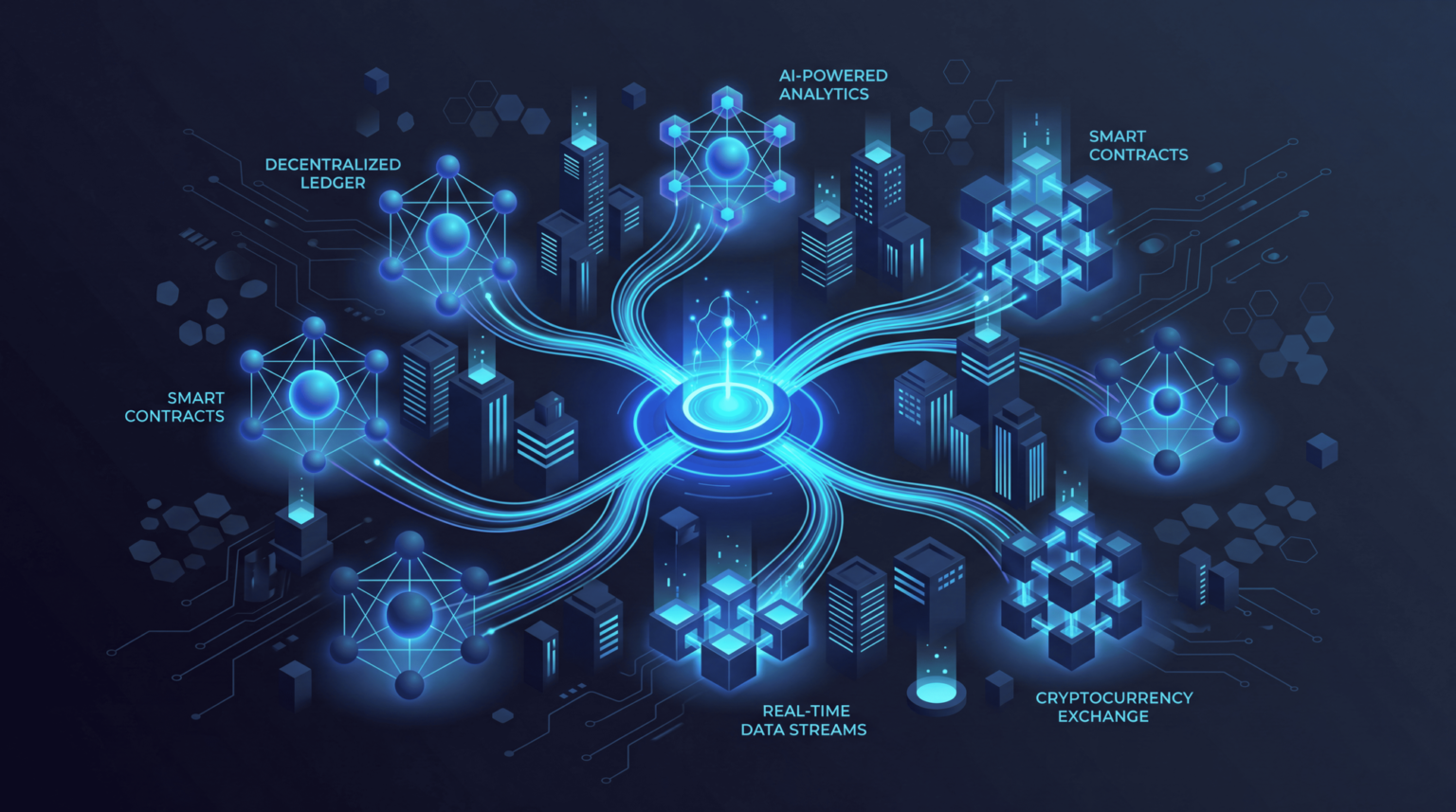
From Ethereum’s parallel execution overhaul to quantum-resistant encryption and institutional tokenization, blockchain technology is undergoing its most significant structural upgrade to date.
The cryptocurrency landscape in 2026 is moving decisively beyond speculative trading cycles and temporary narrative pumps. Beneath surface-level market movements, core developers, cryptography researchers, and enterprise architects are actively rebuilding the foundational tech stack of Web3.
With the impending arrival of Ethereum’s “Glamsterdam” upgrade, a rapid surge in real-world asset (RWA) tokenization rails, and the integration of quantum-safe signature schemes, the underlying infrastructure of decentralized networks is maturing into high-performance, enterprise-grade architecture.
1. Ethereum’s Glamsterdam Hard Fork: Parallelizing the Base Layer
Following previous roadmap milestones like Dencun, Pectra, and Fusaka, Ethereum core engineers are preparing for Glamsterdam—the network’s flagship architectural upgrade designed to optimize Layer-1 execution and validator neutrality.
While previous updates focused primarily on scaling Layer-2 rollups via data blobs (EIP-4844), Glamsterdam directly addresses base-layer transaction processing throughput and state management:
- Block-Level Access Lists (BALs): Glamsterdam shifts Ethereum away from rigid, sequential transaction processing towards parallelized EVM execution. By pre-declaring transaction access parameters, validator nodes can process non-conflicting state changes simultaneously, drastically reducing block propagation delays.
- Enshrined Proposer-Builder Separation (ePBS): The upgrade bakes Proposer-Builder Separation natively into the consensus layer. This eliminates reliance on centralized third-party MEV (Maximal Extractable Value) relays, enhancing network censorship resistance and validator security.
- Verkle Trees & Stateless Clients: Replacing legacy Merkle Patricia trees with Verkle trees allows light clients to verify state transitions with lightweight cryptographic proofs, mitigating long-term state bloat and reducing processing overhead for node operators.
2. Solana and DePIN Expansion: Doppler Infrastructure On-Chain
High-performance monolithic blockchains are also expanding their technical utility. On Solana, decentralized physical infrastructure networks (DePIN) like Helium and GEODNET continue to generate substantial protocol fee volume, proving the viability of decentralized hardware networks.
Concurrently, the deployment of specialized market infrastructure—such as the newly integrated Doppler Protocol—enforces programmatic liquidity channels directly on-chain. This allows developers to build custom market structures and tokenized financial assets with minimal settlement latency, solidifying Solana’s position as a hub for both DePIN applications and institutional asset tokenization.
Key Architectural Trend: The industry is pivoting from general-purpose smart contract execution toward hyper-specialized execution environments, where specialized middleware handles real-time liquidity routing and state verification.
3. Institutional Asset Tokenization & Interoperability Rails
A central theme of 2026 crypto technology is the convergence between traditional financial institutions (TradFi) and decentralized finance (DeFi) primitives. Financial heavyweights and central banks are moving beyond isolated private testnets to deploy programmable tokenization frameworks on public and hybrid blockchains.
The scale of tokenized real-world assets (RWAs)—ranging from short-term U.S. Treasuries to commercial bank deposits—has grown exponentially. Initiatives like the Bank for International Settlements’ (BIS) Project Agorá demonstrate functional prototypes combining tokenized commercial bank deposits with tokenized central bank reserves on shared, programmable ledgers for real-time cross-border settlements.
4. Quantum Resistance and Cryptographic Upgrades
As quantum computing hardware advances toward commercial thresholds, the digital asset sector is proactively addressing vulnerabilities in legacy elliptic-curve cryptography (ECDSA).
Developers across Bitcoin, Ethereum, and specialized Layer-1 protocols are actively designing and testing Post-Quantum Cryptography (PQC) standards:
- Lattice-Based Signature Schemes: Testing replacement algorithms approved by NIST to protect long-term cold storage addresses from prospective quantum decryption vectors.
- Account Abstraction (ERC-4337 Evolution): Smart accounts enable seamless cryptographic algorithm swapping, allowing user wallets to upgrade from ECDSA to quantum-resilient signatures without requiring users to burn or migrate their existing addresses.
- Zero-Knowledge (ZK) STARK Verification: Broader adoption of Scalable Transparent ARguments of Knowledge (STARKs) provides quantum-resistant zero-knowledge proofs, securing cross-chain bridges and rollup state transitions against future hardware exploits.
Summary Comparison of Key Technical Upgrades
| Technology Focus | Core Mechanism | Primary Industry Benefit |
| Parallel EVM (Glamsterdam) | Block-Level Access Lists (BALs) | Drastically higher throughput and lower L1 gas spikes. |
| ePBS Integration | Native Consensus Separation | Eliminates centralized MEV relays; improves security. |
| Verkle Trees | Stateless Client Proofs | Solves historical state bloat for node operators. |
| Post-Quantum Cryptography | Lattice-based signatures & STARKs | Shields wallet addresses and bridges against quantum threats. |
Looking Forward: Enterprise-Grade Foundation
The technological focus across Web3 in 2026 has shifted from high-level experimentation to rigorous infrastructure hardening. By combining parallel execution engines, native censorship resistance, quantum-safe encryption, and institutional-grade tokenization standards, public blockchains are laying the foundation to serve as the global settlement layer for future financial systems.