


Quick Facts:
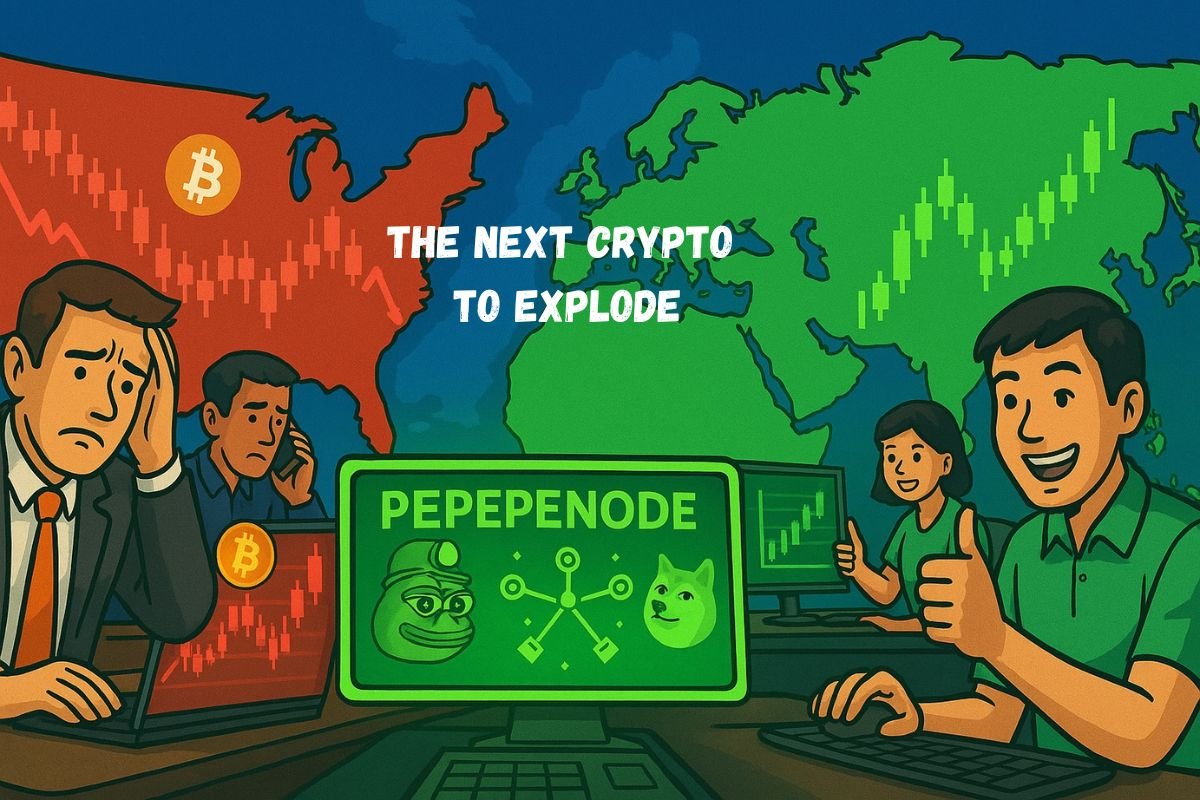
In late 2024, you watched something unusual play out on the Bitcoin chart.
US trading hours drove a slide of more than 20% in November, triggering the classic question: Is the crypto winter back?
Yet, Asian sessions continued to step in and buy the dip in bitcoin, creating a sharp regional split in sentiment. On-chain analyst Ki Young Ju pointed to one key structural reason the market did not unravel more deeply:
“In classic cycle theory, the market should revisit the realized price around $56K to form a cyclical bottom, but because players like MSTR are unlikely to sell and those coins are effectively off the market, I doubt we will see $56K.”
There was no major negative news catalyst, on-chain activity remained resilient, and Asian desks continued to average in, all of which suggested a confidence gap rather than a thesis breakdown.
If you believe this is a temporary dislocation rather than a macro top, the question shifts from “will bitcoin dip again?” to “what high-upside narratives could outperform on the next leg up?”
The divergence between US sellers and Asian buyers matters because it tells you who is willing to fund the next wave of crypto risk.
In past cycles, that rotation flowed into narrative leaders like Dogecoin, Shiba Inu, and, more recently, Pepe, with their combined market caps frequently adding billions of dollars within weeks after major Bitcoin reversals.
These memecoins offer no hard cash flow, but they do offer asymmetric upside when liquidity, leverage, and social media attention align.
This time, the memecoin sector is colliding with “play‑to‑earn” mechanics and engaging mining models. Projects such as Notcoin on Telegram, mining-themed clickers on Solana, and speculative node ecosystems on BNB Chain are all trying to turn casual interaction into token distribution.
PEPENODE positions itself as one of these experiments, focused specifically on a virtual mining experience rather than pure meme rotation.
One reason interest is shifting to mine‑to‑earn concepts is that classical mining has become almost unreachable for the average retail user.
The process is capital-intensive, technical, and, frankly, boring for most people.
Gamified mining flips that model. Instead of buying hardware, you buy virtual miners or nodes and interact through a web or mobile interface.
The token becomes both a meme and an in‑game resource.
Rather than promising industrial-grade yields, it focuses on a virtual mining system, a gamified dashboard, and variable-strength nodes that reward early adopters.
Compared with static meme tokens that rely solely on community hype, it attempts to hook users with ongoing gameplay and progression.
Smart contracts control staking, rewards, and ultimately governance, but the front‑end experience is framed as a mining game:
The upcoming model tries to fix three issues at once:
While traders argue over the next bitcoin dip level, the $PEPENODE presale has raised $2.17M, with tokens priced at $0.0011592. The staking rewards are also too good to ignore at 593%.
If Asian desks remain net buyers of $BTC and the pullback behaves like a standard 20% to 30% correction, high-beta plays could outperform once volatility compresses.
In that scenario, $PEPENODE offers a pure sentiment and participation bet on memecoins evolving from simple jokes into interactive mining-themed economies.
Disclaimer: This article is for informational purposes only and does not constitute financial, investment or trading advice; always do your own research.






