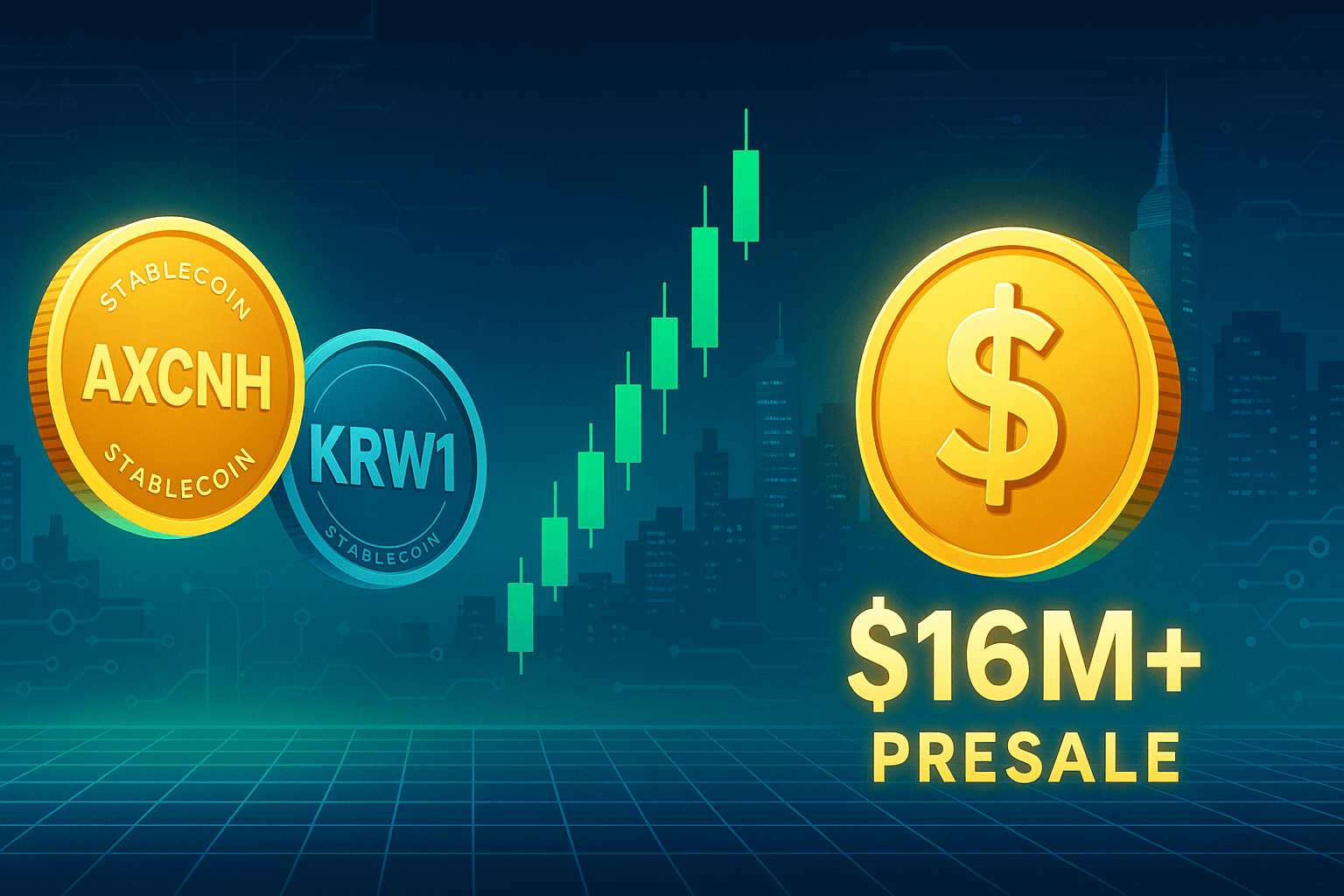
The AxCNH, a Chinese Yuan-pegged stablecoin issued by AnchorX, was officially launched on September 17, 2025 in Hong Kong. BDACS also launched KRW1, a South Korean Won-pegged stablecoin, the following day.
Why do these moves matter? Because the crypto race is heating up.
Retail users also stand to gain. Putting fiat on-chain enables near-instantaneous 24/7 cross-border settlement and brings smart contracts into the mix. This not only reduces correspondent-bank friction, but allows for programmable FX flows (like atomic swaps and other DeFi uses).
Currently in phase 2 of its roadmap, this crypto project bridges the gap between crypto and CeFi with effortless onramping, multi-chain support, low-cost swaps, and more features like derivatives trading and a debit card in the pipeline.
Unlike traditional financial systems, the blockchain never sleeps. With no business hours or potential correspondent delays to tie it down, both individuals and businesses trading on-chain benefit from a reliable, around-the-clock solution.
This also makes currency faster and more easily accessible, even for cross-border payments or transfers, giving people real reasons to use blockchain over legacy systems.
More importantly, being fiat-backed and overcollateralized, these stablecoins align with global regulatory expectations, raising institutions and retail users’ trust and confidence to embrace crypto.
Unlike traditional financial systems, stablecoins also rely on oracle networks like Chainlink, which enable real-time, tamper-resistant data and automated, trustless smart contracts for lending and DeFi trading.
For newcomers still uncertain about entering the crypto landscape, stablecoins offer a familiar entry point, as they resemble fiat currencies and create a safe environment for traders to operate without concerns about volatility.
It provides traders with a streamlined multi-chain hub that directly supports top networks like Bitcoin, Ethereum, Solana, BSC, and Base (with 60+ more chains coming in the near future). Some of the other perks of Best wallet include:
Besides, the app’s WalletConnect compatibility allows you to connect to other external crypto platforms like derivatives exchanges and other dApps.
With this, you can leverage more advanced strategies and enable seamless yield farming across more ecosystems.
By holding $BEST, you can benefit from reduced in-app transaction fees, early access to vetted new presales, and higher staking rewards in the app’s upcoming staking aggregator.
With all projects vetted and smart contract audits available, it’s easier than ever to find trusted projects and avoid honeypots or other scams.
$BEST also integrates trading incentives with governance, creating upside beyond speculation. By giving holders a direct role and voting rights on the app’s future direction, $BEST ensures its base stays loyal and active as the project’s roadmap progresses.
With rapid presale traction and ambitions to capture 40% wallet market share by 2026, $BEST offers plenty of room for growth.
Its fundraiser is still ongoing as the dev team is working behind the scenes to introduce more advanced features (like NFT support, a crypto debit card, and a staking aggregator coming in phase 3).
Zooming out, the potential upside looks even better under bullish conditions. By 2026, $BEST could hit $0.0510, pushing your $500 stack to about $995 (a 2x move), and $0.07 by 2030, growing your investment to ~$1,360 (7x higher).
On top of this, $BEST offers dynamic staking rewards (currently at roughly 83% APY). If the reward rate stays high in the upcoming months, you could be racking up around $915 on your $500 investment, without factoring in token price moves.
With momentum building, the next price increase drops in under 12 hours.
This is not financial advice. Please always do your own research before investing in cryptocurrencies.