


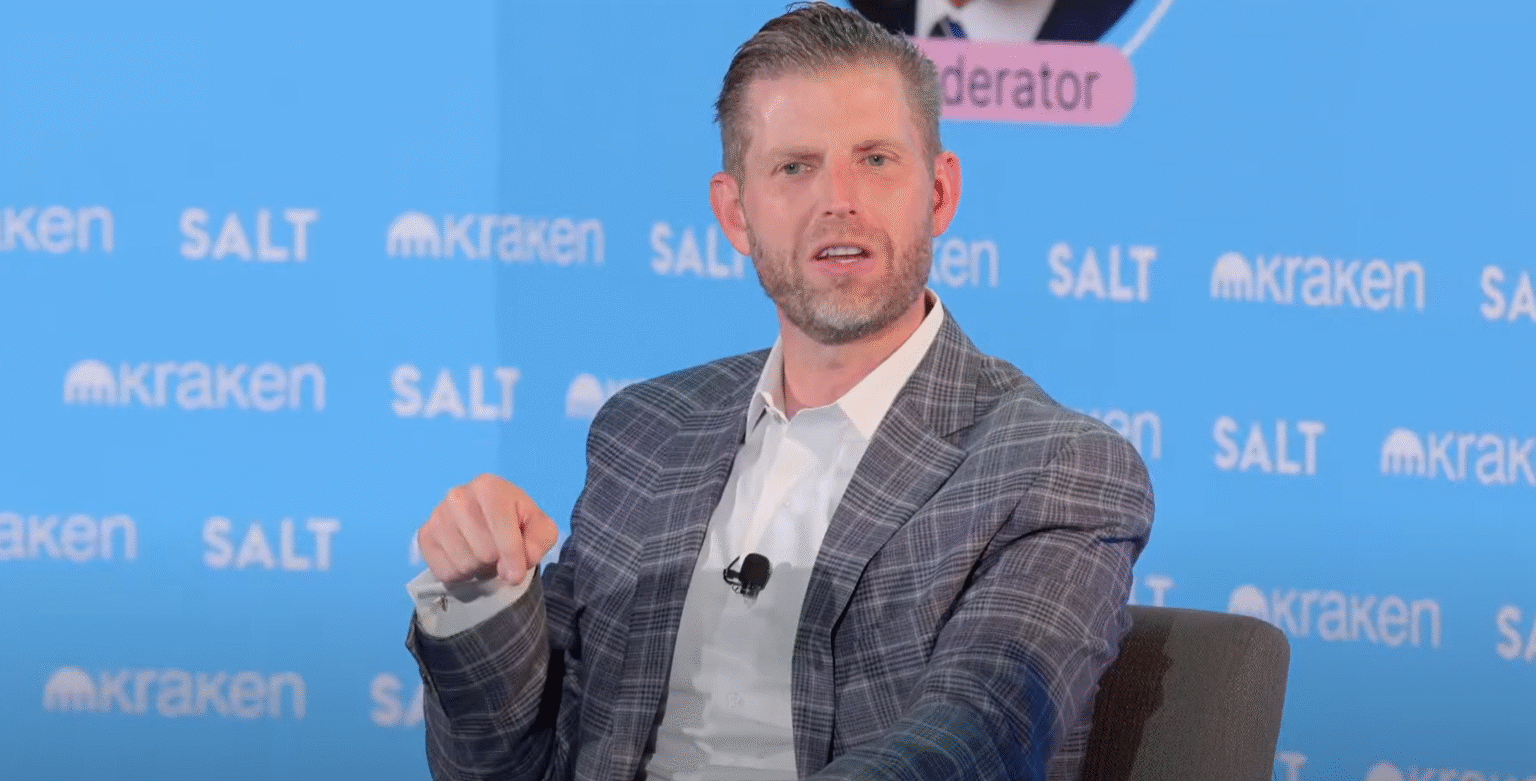
He added: “Or, you know, our country just bought 200,000 Bitcoin and we did so very quietly. We don’t want anybody to know about it, but that’s how much we believe in the asset.” Trump offered no name, timeline or documentation, and framed the remark as an anecdote from conversations with global leaders. The figure — 200,000 BTC, roughly $22 billion at recent prices — instantly ricocheted across social platforms and crypto trading chats.
“I probably spend over 50% of my time in crypto,” he added, calling the current backdrop “the best [regulatory environment] it’s ever been” and declaring that BTC is “on the one-yard line,” with growth over the next six months “explosive” and the next decade “amazing.” While calling himself a “Bitcoin maxi,” he reiterated his price targets: “There is no doubt about Bitcoin reaching $1 million,” adding that “it is expected to reach $175,000 by the end of this year.”
Pressed on geopolitics, he described a “digital land grab” by sovereign wealth funds and corporates moving to add BTC to treasury reserves. “In ways that you can’t even imagine,” he said, before recounting a Greenwich private-banker friend who once derided BTC as “funny money” but later called asking how to buy — at triple the price.
Trump argued that the convergence of debanking risk, inflation stress in emerging markets and the frictions of the legacy payments system is accelerating institutional and retail adoption: “We could pop up a wallet and I could transfer $100 million of Bitcoin…in two seconds,” he said, contrasting it with a year-long commercial real-estate sale process.
The panel also focused on an inside look at American Bitcoin, the Trump-backed mining-plus-treasury vehicle being carved out with Hut 8. Hut 8 CEO Asher Genoot laid out the operating math: last quarter, he said, energy cost to mine a bitcoin averaged about $37,000, with all-in cost near $57,000, positioning the operation at a steep discount to spot purchases.
Hut 8 currently manages around a gigawatt of capacity with additional sites under exclusivity and a multi-gigawatt pipeline, he added, arguing that vertical integration lets American Bitcoin “be this pure-play mining business that gets vertically integrated economics without the overhang of a large fixed management team.” He emphasized discipline over scale for scale’s sake, likening capital allocation to oil and gas: if new rigs (ASICs) don’t beat simply buying BTC over the machine’s life, they don’t buy.
At press time, BTC traded at $113,845.






