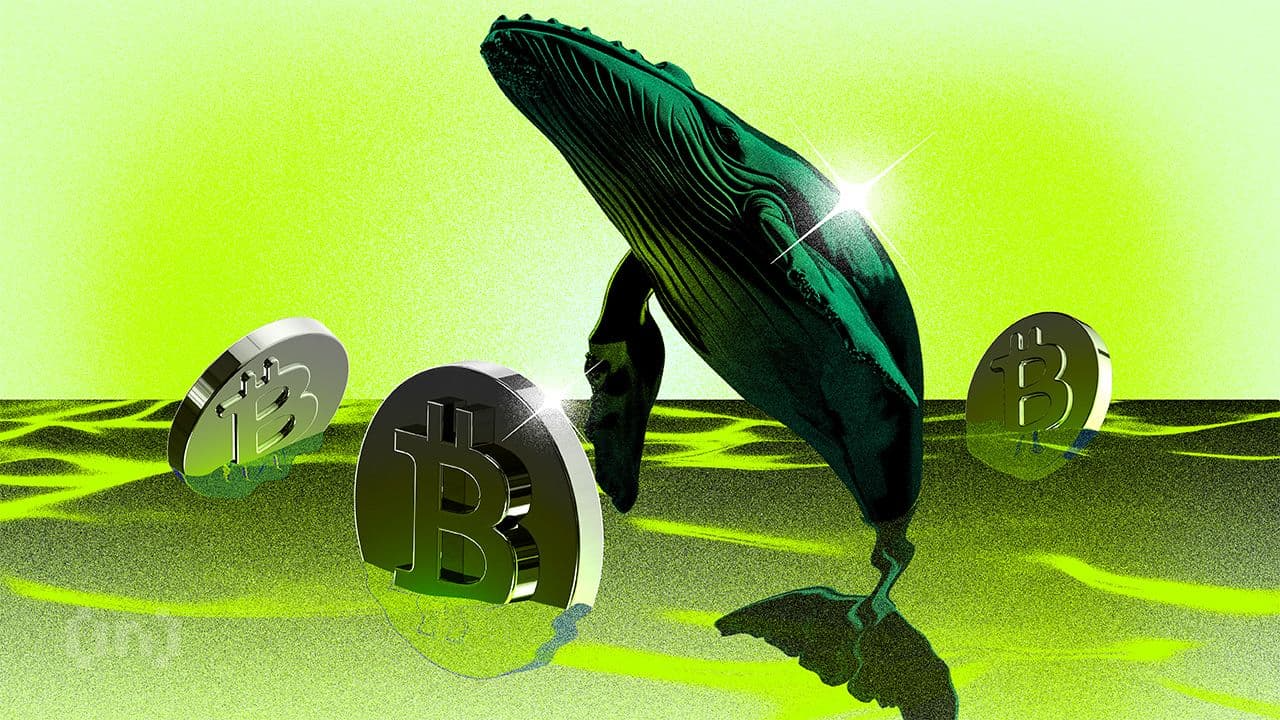
Bitcoin market trends are revealing a notable shift in investor behavior as large holders, commonly referred to as whales, continue to accumulate BTC during the ongoing price decline. While short-term price weakness has triggered caution among retail investors, on-chain data suggests that high-net-worth individuals and institutional players are quietly increasing their exposure, signaling confidence in Bitcoin’s long-term value proposition.
The broader crypto market has been under pressure due to macroeconomic uncertainty, fluctuating interest rate expectations, and evolving regulatory narratives. These factors have contributed to heightened volatility and short-term selling pressure across major digital assets. However, whale accumulation during market downturns has historically been viewed as a potential bullish signal, often preceding periods of price stabilization or recovery.
On-chain metrics show a rise in Bitcoin transfers to wallets holding significant balances, alongside a decline in BTC held on centralized exchanges. This trend typically indicates long-term holding behavior, as whales move assets off exchanges to cold storage rather than preparing them for immediate sale. Reduced exchange supply can tighten market liquidity, which may support future price appreciation if demand rebounds.
Whales often employ strategic accumulation during periods of fear and uncertainty, capitalizing on discounted prices while smaller investors retreat. Their investment decisions are generally backed by advanced analytics, macroeconomic modeling, and deep liquidity access, giving them a broader perspective on market cycles. As a result, whale activity is closely watched by traders seeking insight into potential trend reversals or market bottoms.
The divergence between retail sentiment and whale behavior highlights the psychological dynamics of Bitcoin markets. While short-term traders may react to daily price movements, whales tend to focus on multi-year horizons, viewing corrections as opportunities rather than threats. This pattern has been observed in previous market cycles, where periods of heavy whale accumulation eventually aligned with renewed bullish momentum.
Derivatives data further complements this narrative, with changes in open interest and funding rates reflecting cautious positioning among leveraged traders. At the same time, long-term holders appear unfazed by near-term volatility, reinforcing the idea that Bitcoin’s fundamental appeal remains intact despite price fluctuations.
Still, whale accumulation does not guarantee an immediate price reversal. External catalysts such as macroeconomic shifts, regulatory developments, or broader risk sentiment across global markets can influence Bitcoin’s trajectory. Investors should therefore interpret whale buying as one of several indicators rather than a standalone signal.
As Bitcoin continues to navigate uncertain market conditions, whale activity provides valuable insight into how experienced market participants are positioning themselves. Whether this accumulation marks the early stages of a recovery or a prolonged consolidation phase, it underscores ongoing confidence in Bitcoin as a store of value and a key asset within the digital economy.