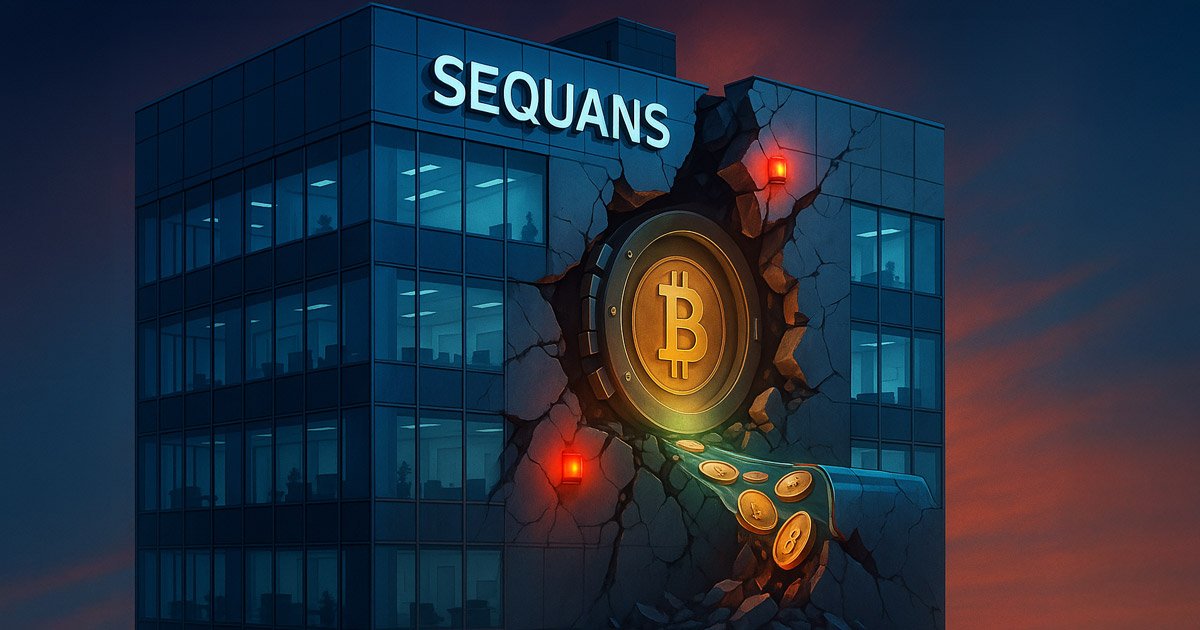
By doing so, Sequans aims to meet NYSE compliance requirements and appeal to funds that only allocate capital to stocks trading above certain thresholds.
Sequans also linked the measure to its corporate strategy, noting that the company remains committed to its Bitcoin treasury holdings. According to Bitcoin Treasuries, Sequans controls 3,205 BTC, which is valued at roughly $355 million.
Despite the explanation, investors reacted cautiously to the reverse splits, with the company’s stock falling 5% to $0.80 as of press time.
According to Google Finance data, this continues a year-long trend that has seen the stock decline more than 75% since January.
The move has raised concerns within the Bitcoin community, with Pledditor, a well-known commentator on X, arguing that Sequans’ stocks risked delisting without the measure.
“[Sequans is] the very first Bitcoin Treasury company forced to perform a reverse split due to poor price performance…Will they also become the first company to dump their coins?”
This development highlights the contrasting fortunes of firms holding Bitcoin on their balance sheet.
That success has encouraged several smaller firms like Sequans to adopt similar treasury policies this year.
Yet analysts warn that these kinds of smaller companies face greater risks, especially if their core business underperforms.
It also added that falling crypto prices can trigger a self-reinforcing cycle in which companies sell assets to defend their share price, further depressing market sentiment.