


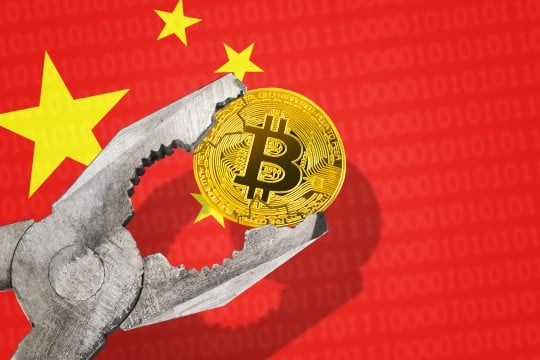
China has intensified its long-standing crackdown on cryptocurrencies, issuing fresh warnings that label stablecoins as a major money-laundering risk. In a new policy update, Chinese regulators emphasized that digital assets—particularly USD-pegged stablecoins—pose significant threats to financial stability, capital controls, and law-enforcement efforts. This marks one of the strongest statements to date since China imposed its nationwide crypto trading and mining ban.
Authorities argue that stablecoins enable cross-border value transfers that are harder to monitor, potentially allowing illicit actors to bypass China’s strict capital-flow restrictions. Financial watchdogs highlighted growing concerns over criminal networks using stablecoins for underground banking, tax evasion, and moving funds outside the regulated financial system. As a result, Beijing is calling for deeper surveillance, stricter enforcement, and enhanced cooperation with international anti-money-laundering agencies.
This renewed pressure comes at a time when stablecoin adoption is expanding globally, with institutions and fintech firms increasingly integrating digital-dollar tokens into payment systems. China, however, continues to promote its digital yuan (e-CNY) as the only lawful form of digital currency within its borders. Experts note that China’s hardline stance is strategically aligned with its efforts to maintain full control over monetary policy, data oversight, and internal capital flows.
Despite the tightening restrictions, crypto activity has not disappeared entirely. Reports show that some Chinese users continue to access offshore exchanges through VPNs, while others rely on peer-to-peer channels—highlighting a persistent demand for digital assets even under strict prohibition. Regulators warn that such behavior will face heightened scrutiny as enforcement expands.
China’s renewed messaging reinforces a clear direction: the country is not softening its crypto ban. Instead, it is doubling down, positioning stablecoins as high-risk financial instruments that threaten national security and economic order. As other nations explore balanced regulation, China’s rigid framework stands in sharp contrast, shaping the global debate around digital-asset governance.






