The number of tradable crypto tokens has gone parabolic since 2022, with CoinMarketCap now tracking roughly 18.9 million digital assets, compared to a little over 20,000 in 2022.
In January of that year, roughly 20,000 assets were listed across major trackers. By mid-2025, that universe swelled to an estimated 18.9 million, an astonishing 945x increase in just three and a half years.
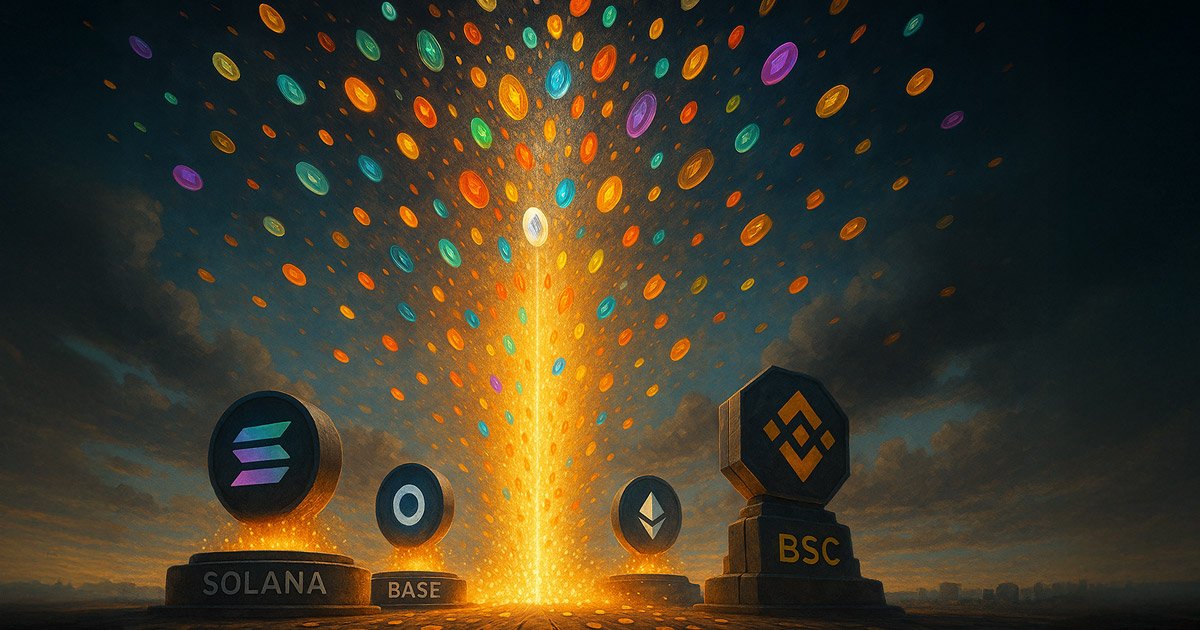
Solana is the epicenter. Over the past year alone, the chain saw on the order of 18 million new tokens minted as memecoin factories and no-code issuers lowered the barrier to creation to pennies.
The result is a torrent of micro-cap assets, most launched for fun, virality, or speculation, and many never progressing beyond a few wallets and a shallow liquidity pool.
Base has emerged as the fastest follower. In barely a year, developers and creators deployed more than 8.4 million fungible tokens on the network.
Binance Smart Chain (BSC), which pioneered the cheap-token boom in 2021, continues to significantly contribute to new token launches.
While its share of new issuance has faded relative to Solana and Base, BSC remains a go-to venue for fast, low-cost launches.
In practical terms, most of the 18.9 million tokens are illiquid, thinly traded, and highly susceptible to manipulation. Prices can rocket or crater on a few hundred dollars of flow, and rug-pulls remain a risk wherever low-effort issuance thrives.
For teams, the sheer existence of a token no longer confers value. Protocols must prove durable demand by showing users, fees, cash flows, or compelling utility to attract liquidity in a saturated field.
Networks face their own trade-offs. High throughput and low fees empower permissionless creativity but also invite spam and churn.