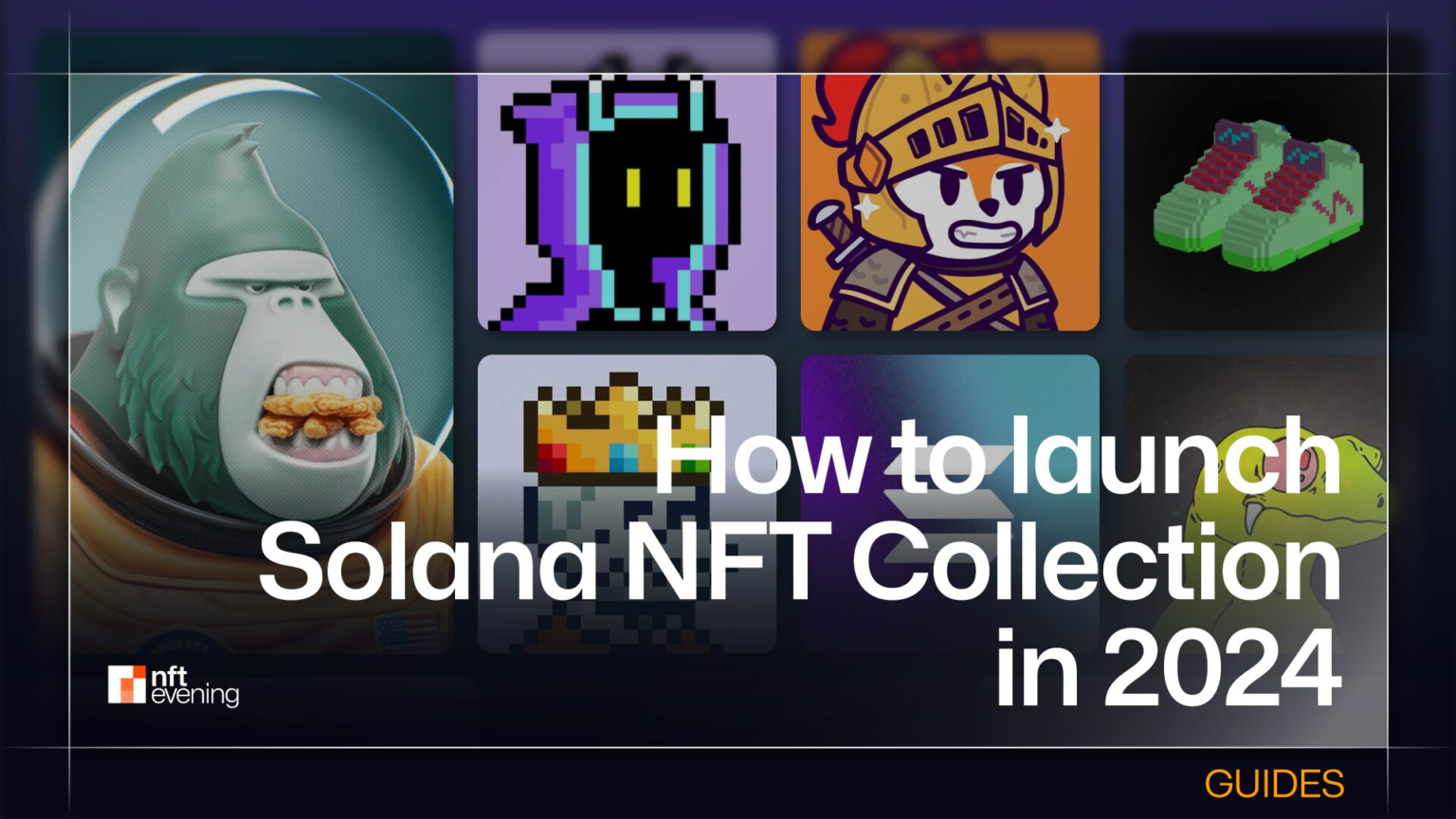
The Solana blockchain has emerged as a powerful platform for creators to launch their own non-fungible token (NFT) collections. With its blazing-fast transaction speeds, low fees, and growing ecosystem, Solana offers a compelling alternative to Ethereum for NFT projects.
Here’s a comprehensive step-by-step guide for launching your Solana NFT collection, covering everything from initial setup to post-launch promotion.
Solana is a popular layer-1 blockchain that is becoming a favorite for creating and trading NFTs. Blockchains are digital ledgers that record transactions securely and transparently.
Solana is known for being fast and cheap compared to other blockchains like Ethereum or Bitcoin. These features make it an attractive choice for people who want to create and trade NFTs without spending a lot on transaction fees.
On average, Solana can process about 65,000 transactions per second, which is much higher than Ethereum’s 15 transactions per second. Solana’s high throughput ensures that minting and trading NFTs on Solana is quick and seamless.
The cost of transactions on Solana is also very low. While Ethereum’s transaction fees can range from $10 to $50 or more during peak times, Solana’s fees are typically around $0.0025 per transaction. This makes it much more affordable for creators and buyers to mint and trade NFTs.
So, why would someone choose to create an NFT on Solana instead of another blockchain? Here are a few reasons:
Solana Wallet: Set up a Solana wallet to store your SOL tokens and interact with the blockchain. Popular options include Phantom and SolFlare.
Choosing a Solana NFT Minting Platform: Several Solana-based platforms simplify the NFT minting process. Here are a few popular options:
Candy Machine empowers you to set crucial minting details without needing to write code. This includes
Candy Machine integrates seamlessly with Metaplex’s Metadata Uploader, allowing you to upload the metadata associated with your NFTs. This metadata acts as a digital certificate, storing information like the NFT’s name, description, and the location of its artwork file. You can upload metadata for your entire collection in bulk, saving you time and effort.
Traditionally, airdropping NFTs involved creating individual accounts for each recipient on the blockchain. This can be expensive and time-consuming, especially for large-scale airdrops. Gumdrop solves this problem by leveraging a technology called “Merkle Trees”.
You can consider Merkle Tree like a giant family tree, in this case, the list of people eligible for your airdrop. Each person’s information (like their wallet address) is assigned a unique code at the bottom of the tree. These codes are then grouped and combined to create higher-level codes as you move up the tree.
The beauty lies in the fact that even if you only know the top code (called the root), you can verify if a specific person’s code (like their wallet address) is part of the original list.
Here’s how it works:
The artwork is the soul of your NFT collection. It’s what attracts people and makes them want to own a piece. Here’s what to consider:
Each NFT needs some extra information attached to it, kind of like a digital certificate. This information is called metadata and it includes things like:
Luckily, tools like Metaplex’s Metadata Uploader (mentioned earlier) make adding this information a breeze. It helps you organize all the details for your NFTs quickly and easily.
Once you have your artwork and metadata ready, it’s time to mint Solana NFT. Minting is the process of creating digital tokens on the blockchain.
Once everything is set up, you can initiate the minting process and your NFTs will be born on the blockchain with unique embedded copyright licenses. Remember you need to pay the gas fees.
Pricing Strategy: Determine a pricing strategy that balances accessibility with perceived value. Consider offering tiered pricing for different rarities or conducting an auction.
Marketing and Promotion: Promote your collection across various channels. Utilize social media, collaborate with influencers, and explore paid advertising options to reach your target audience. This makes it easy for users to buy and sell NFTs.
Community Engagement: Maintain active communication with your community. Address concerns, answer questions, and host events to keep them engaged.
To conclude our guide on how to launch NFT on Solana, we covered that launching a successful Solana NFT collection requires technical knowledge and planning, but the rewards can be significant. By following the above guide, you’ve equipped yourself with the knowledge to navigate each step of the process, from crafting artwork to setting up your minting platform and launching on the NFT marketplace.
Remember, a strong community is the lifeblood of any NFT project. Engage with your audience, listen to their feedback, and continue to build value for your collection. As the Solana NFT space evolves, stay informed about the latest trends and adapt your approach accordingly.