


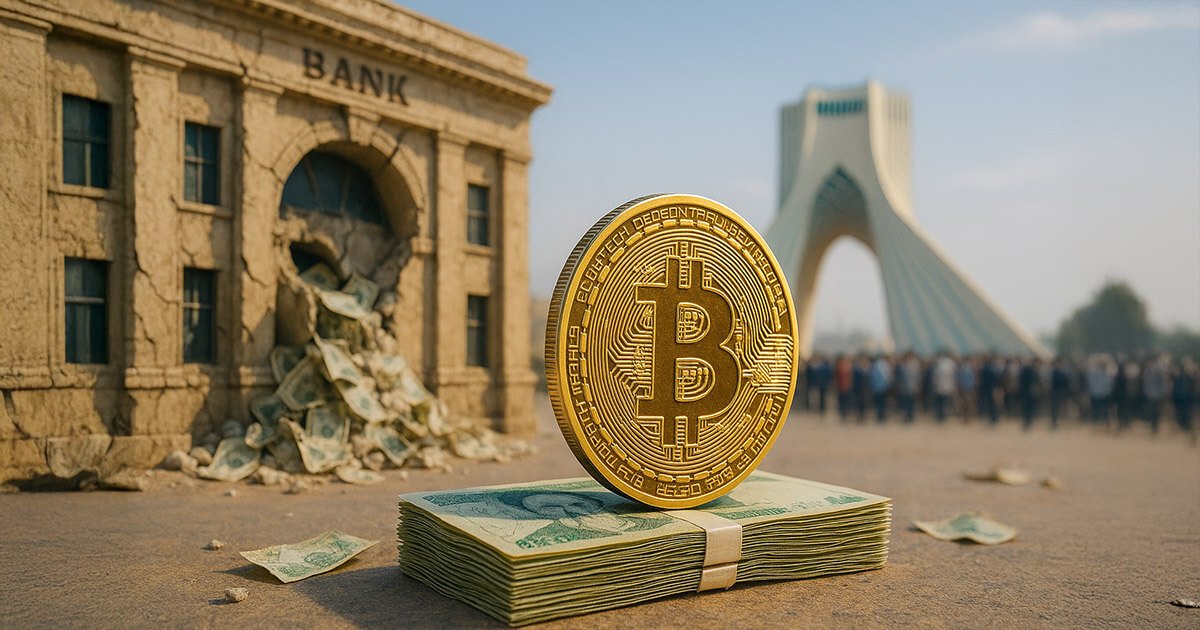
Iran’s financial system just suffered one of its most dramatic implosions in years. The country’s Central Bank declared Ayandeh bank, one of its largest private lenders, bankrupt and its assets were absorbed by the state.
For ordinary Iranians, the real fear isn’t corporate losses, it’s access. Insured deposits in Iran are capped at just 1 billion rials (roughly $930) and payout processes can take years. Those holding more may never see their money again.
Iran isn’t alone. Around the globe, central banks have stepped in to cushion financial chaos, often too late for depositors caught in the wrong institutions. In the United States, the shock failures of Silicon Valley Bank, Signature Bank, and First Republic Bank in 2023 became the biggest cluster of collapses since 2008. Even as the FDIC and Treasury guaranteed deposits, thousands of startups, small businesses, and uninsured clients were left scrambling.
Although balance sheets are stronger on paper, confidence remains fragile. Market volatility this quarter pushed bank stocks lower before a partial recovery on better‑than‑expected earnings. Analysts now expect a new wave of regional bank mergers and acquisitions as larger players move to absorb weaker rivals.
The Ayandeh bank collapse follows years of poor governance and opaque loans to politically connected projects, including the debt‑ridden Iran Mall mega‑complex. More than 90% of the bank’s funds reportedly went to affiliated companies that never repaid.
What makes these crises rhyme isn’t the geography or ideology; it’s the fragility of trust. Whether in Tehran or San Francisco, savers face counterparty risk every time they deposit funds into a system dependent on state rescue.
The Ayandeh bank collapse isn’t a local tragedy; it’s a global warning. Bank failures, capital controls, and confiscations eventually follow financial repression, wherever it arises. For millions watching savings vaporize through no fault of their own, Bitcoin isn’t speculation anymore. It’s insurance against the system itself.






