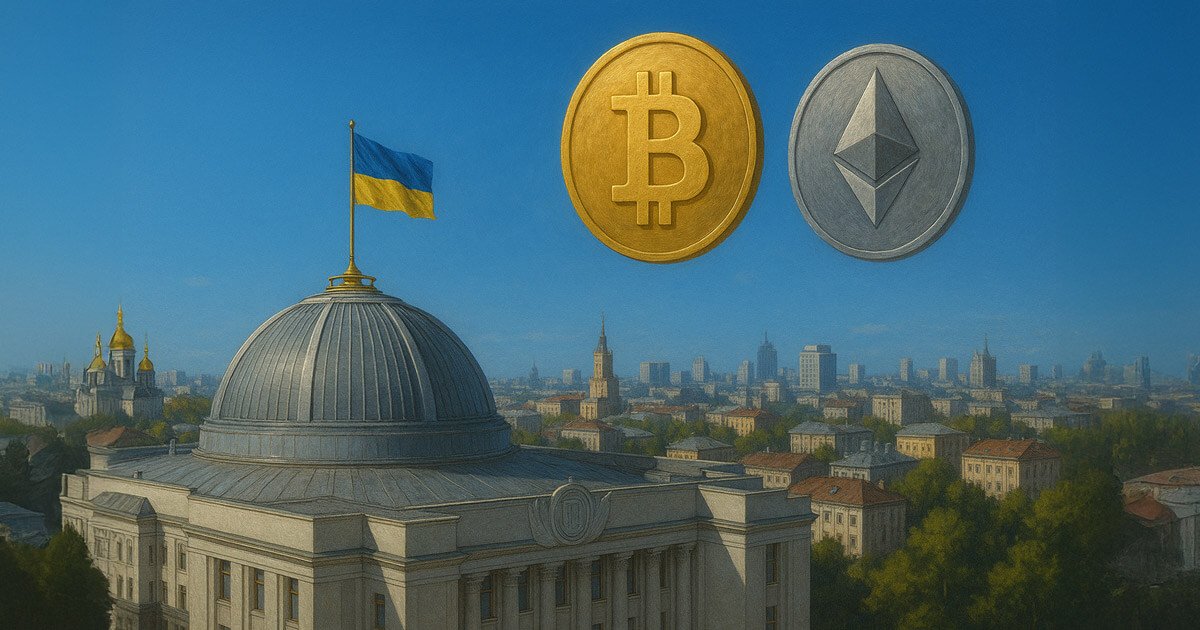
National Bank of Ukraine (NBU) Governor Andriy Pyshnyy said on August 8 that “virtual assets cannot be a means of payment in Ukraine” and described this restriction as a “red line” necessary to safeguard monetary policy and prevent channels for illicit transactions.
The policy stance is shaped in part by Ukraine’s wartime experience with digital assets. In the early months of the Russian invasion, government ministries, NGOs, and volunteer groups turned to cryptocurrencies to receive rapid, cross-border donations.
Enforcement, however, was delayed as lawmakers worked to amend the tax code and designate the appropriate regulators. Under the initial roadmap, lawmakers aimed to pass implementing legislation by the first quarter of 2025, aligning with the European Union’s Markets in Crypto-Assets (MiCA) framework and applying securities-style taxation with no preferential treatment.
The NBU’s latest statements confirm that legalization remains on the agenda, but only within a tightly controlled framework that preserves the hryvnia’s status as the sole legal tender.
Regulatory agencies are continuing to prepare for implementation through measures such as monitoring unlicensed market activity and coordinating with international partners.
The process reflects an effort to capture the wartime-tested advantages of digital assets while embedding them in a structure designed to protect monetary sovereignty and financial stability.