


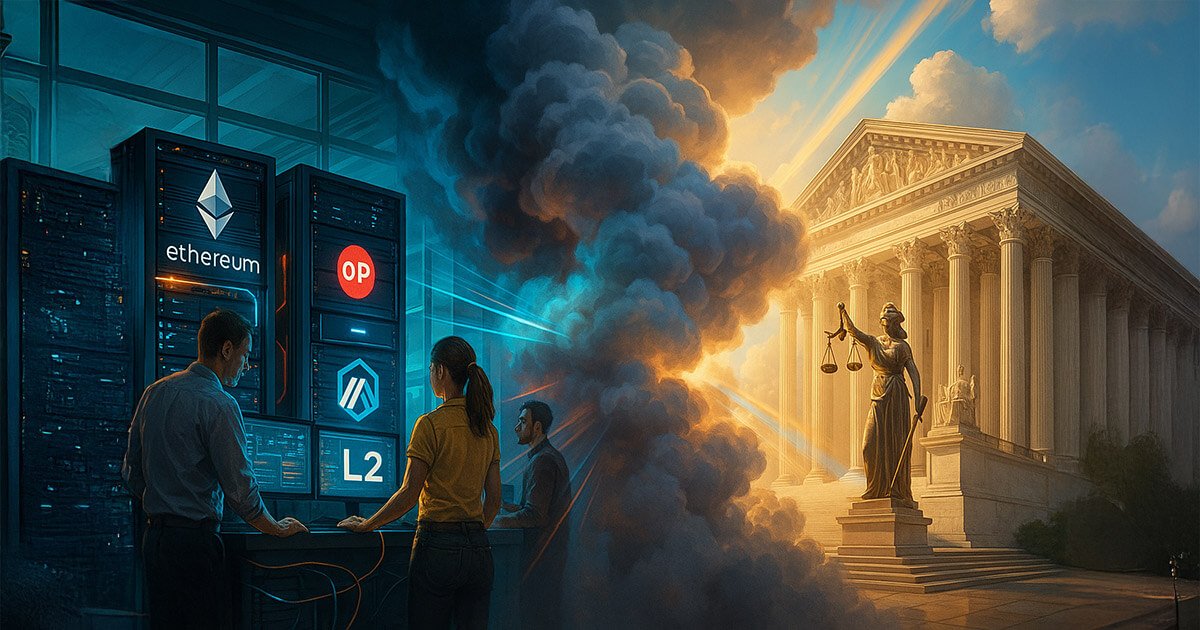
He argued that L2s “batch all transactions while deferring any formal order interaction/matching rules to an app’s smart contracts and frontend.”
He emphasized that sequencers determine transaction processing order but do not act as matching engines that pair buy and sell orders.
According to Pollak:
“Transaction matching or execution happens at the application level, within smart contracts. The sequencer ensures these transactions are executed in a consistent, ordered manner, but it doesn’t decide matches or control trade logic.”
He also noted that users can bypass the sequencer by transacting on Base directly through Ethereum, preserving decentralization and censorship resistance from Ethereum’s validator set.
Peirce outlined different regulatory considerations during a Sept. 8 interview on The Gwart Show, distinguishing between truly decentralized protocols and centralized entities using blockchain technology.
She noted that layer-2 solutions with centralized transaction ordering may face regulatory scrutiny:
“If you have a matching engine that’s controlled by one entity that controls all the pieces of that, then that looks a lot more like an exchange.”
Peirce added that operators must consider exchange registration if they facilitate securities transactions through centralized systems.
Additionally, she emphasized the need to protect truly decentralized protocols, describing them as code that “nobody owns” and cannot register with regulators.
Pollak acknowledged Base’s current centralization, stating the platform has reached “stage 1 decentralization” and enabled permissionless block proposals. The team continues working toward “stage 2” decentralization and further decentralizing block building.
The disconnect highlighted the need for a crypto regulatory framework to solve issues such as the state of Base.






