GameFi is broken – if it ever worked to begin with. Play-to-earn relied on complicated tokenomics (often inflationary), with gameplay driven largely by luck. And if you really wanted to earn more, the easiest way was by bot-powered reward farming.
As a result, the GameFi sector hasn’t really gotten off the ground, mired in crappy gameplay and poor mechanics.
Activity in blockchain gaming has softened in recent months.
Steep year-over-year funding declines and a wave of game shutdowns have been tied to weak retention and unsustainable tokenomics.
But these negative stats might just be the calm before the storm. So far, the GameFi industry has stagnated due to poor games – not because of any problem with the underlying concept.
Another positive sign? Traditional publishers are testing on-chain features:
And blockchain-first architecture is exactly what Tapzi offers.
The winner takes the pot, pure and simple.
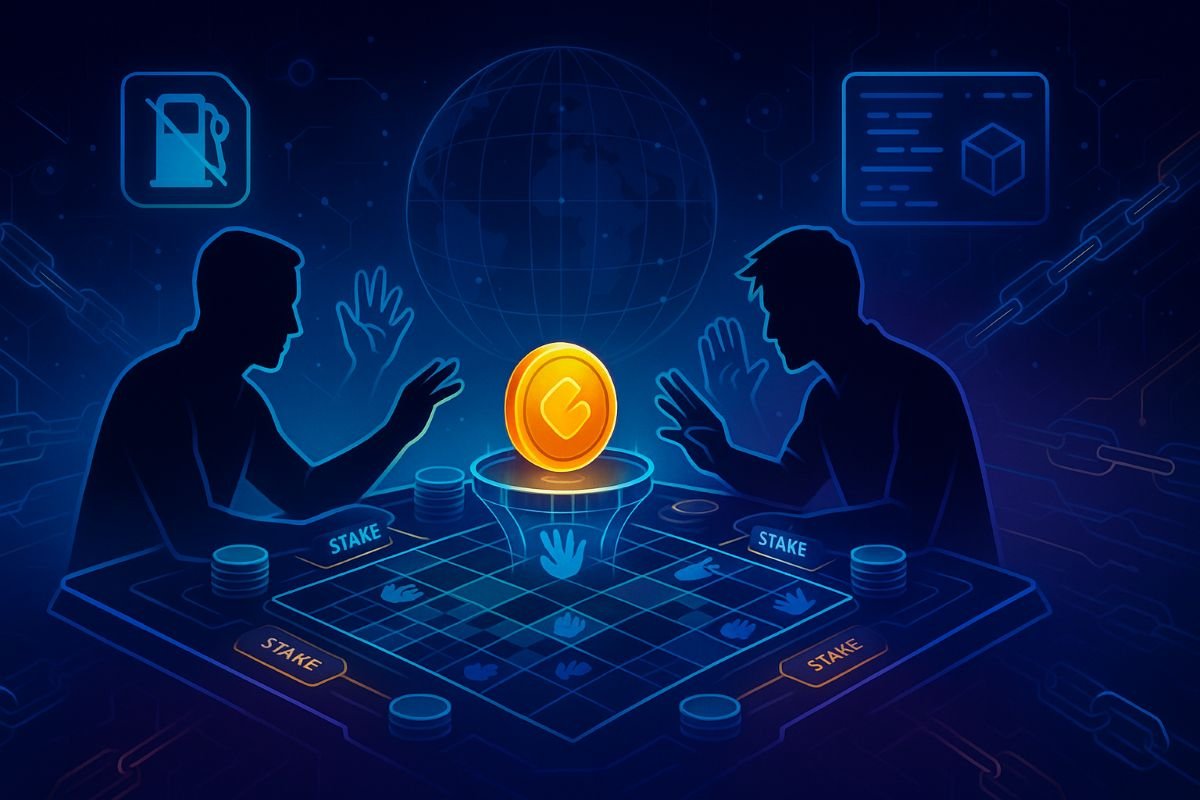
Tapzi’s core loop is simple: before a match of chess, checkers, rock-paper-scissors or tic-tac-toe, both players stake $TAPZI; the winner takes the prize pool.
Tapzi’s not waiting around, either – a demo is already live, with gasless, real-time multiplayer and anti-bot measures to keep outcomes decided by gameplay rather than randomness or emissions.
Tapzi is a platform, not just a single game. SDKs and smart-contract tools are planned so outside developers can launch skill-based titles on Tapzi’s arcade, set custom rules, and route staking-based rewards to players.
That approach aligns with the sector’s tilt toward infrastructure. While simple, classic games ironically provide more reliable gameplay than many more ‘advanced’ GameFi concepts.
Hold $TAPZI to enter matches, join ranked events and purchase upgrades, thereby creating in-game demand. Prize pools are player-funded (winner takes the opponent’s stake), with no additional emissions.
The total supply is 5B tokens: 20% presale, 20% liquidity, 15% locked treasury, 10% for airdrops, development, marketing, and the team behind the project. An additional 5% goes towards user rewards.
Smaller, instantly playable loops, real stakes, and platform-first distribution drive a smooth, practiced feel to the project, in contrast to clunky interfaces of other projects.
Tapzi enters a tougher, more discerning market where metrics and retention matter more than token hype.
Do your own research first, of course. None of this is financial advice.