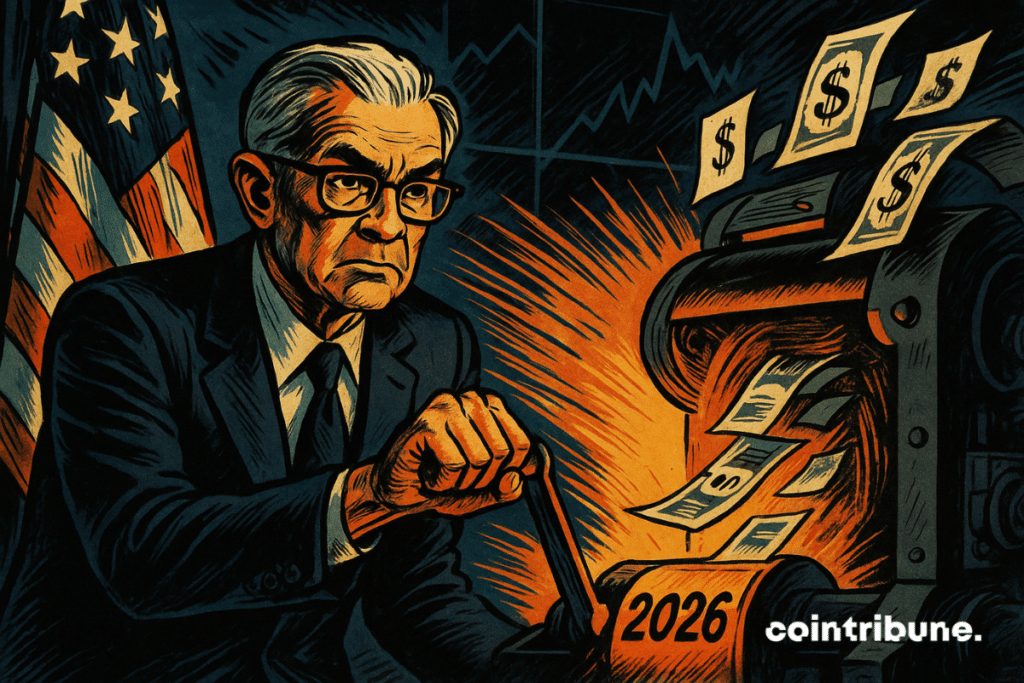
UBS has released a new forecast suggesting that the U.S. Federal Reserve may begin purchasing Treasury securities again in early 2026, signaling an important shift in monetary policy after a prolonged period of quantitative tightening. According to UBS analysts, slowing economic growth, easing inflation, and tightening financial conditions could push the Fed to reintroduce Treasury purchases to stabilize markets and ensure adequate liquidity across the financial system.
The report indicates that by early 2026, the U.S. economy may face softer labor market data, slowing consumer demand, and cooling investment activity. Under such conditions, the Fed could deploy targeted Treasury purchases—often referred to as balance-sheet expansion—to support financial stability and maintain an orderly market environment. While these purchases would not necessarily signal a return to full-scale quantitative easing, they could mark a strategic policy adjustment aimed at countering recessionary pressures.
UBS also highlights ongoing concerns about the rising U.S. debt burden, which has led to heavier Treasury issuance. As government borrowing needs increase, a re-engagement from the Fed could help absorb excess supply, ease bond-market volatility, and relieve upward pressure on long-term yields. Analysts note that without such intervention, yields may remain high enough to hinder economic recovery prospects.
Additionally, expectations of softer inflation by 2026 could give the Fed more flexibility to implement balance-sheet measures without risking renewed price instability. If inflation stabilizes within the Fed’s 2% target range, policymakers may prioritize supporting growth and maintaining liquidity over maintaining a restrictive stance.
Market reactions to the UBS forecast have been mixed. Some investors see it as a positive signal, anticipating improved market stability and potentially lower yields, which could benefit equities, real estate, and risk assets like cryptocurrencies. Others caution that renewed Treasury purchases may signal deeper economic weakness, suggesting that the Fed could be preparing preemptive measures to avoid recession.
As the financial landscape evolves, UBS believes that monitoring economic indicators—including inflation trends, unemployment rates, and Treasury demand—will be critical in anticipating the timing and scale of any Fed action. The prediction underscores the delicate balance the Federal Reserve must strike between controlling inflation, supporting economic growth, and maintaining the stability of U.S. financial markets.
Stay tuned for further updates as analysts and policymakers continue to assess economic conditions heading into 2026.