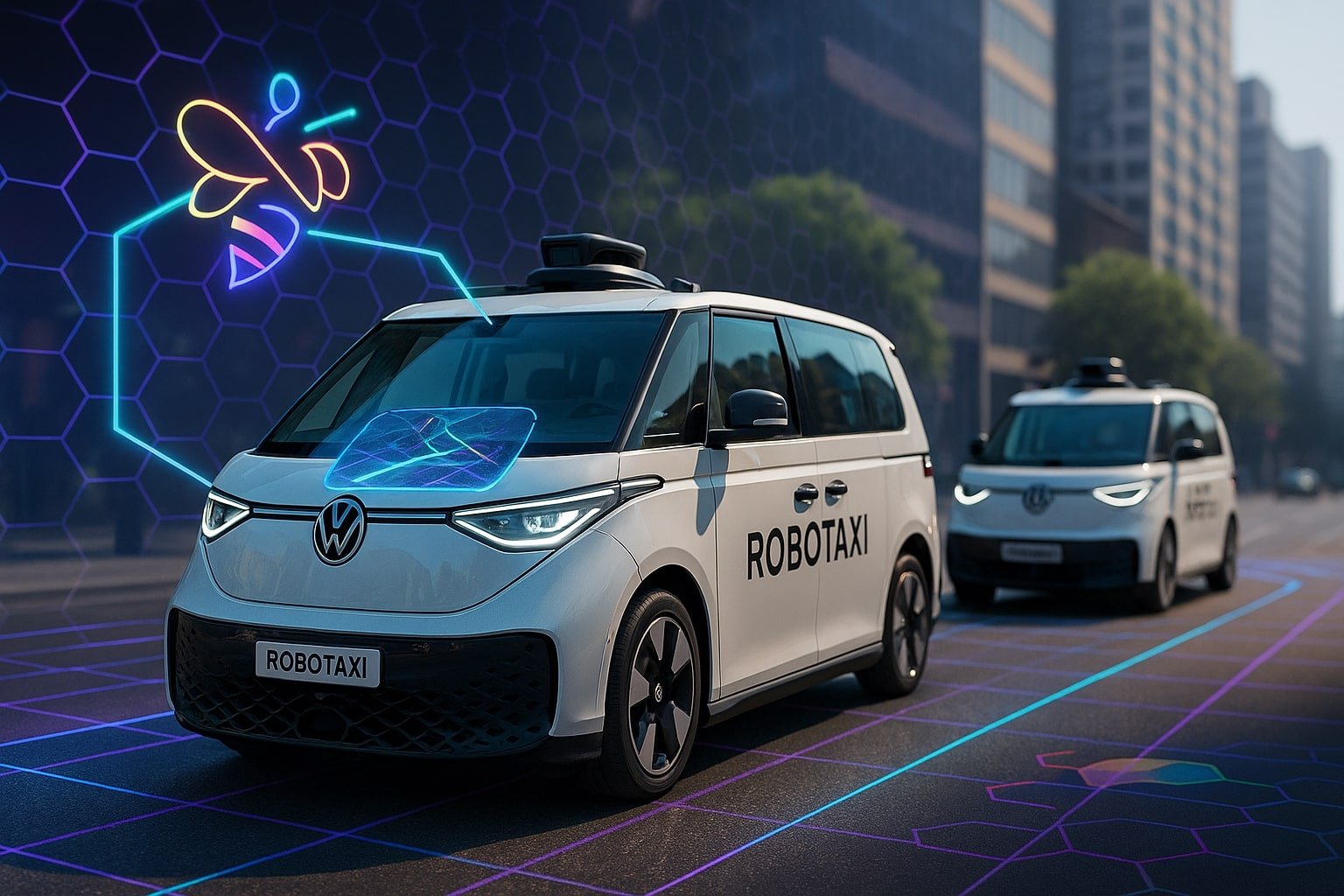
Bee Maps aggregates imagery from drivers who install proprietary “Bee” dashcams and upload footage that machine-learning models translate into lane markings, signage, and temporary work zones.
Hivemapper, which records contributions on the Solana blockchain, says its network now covers a double-digit share of global roads and updates more frequently than traditional fleet-car surveys.
Bee Maps sells the resulting data through APIs that feed routing, localization, and curb-management engines used by logistics firms and, now, robotaxi developers.
The companies did not disclose financial terms, but Bee Maps’ product literature indicates that it typically charges consumption-based fees rather than long-term licenses.
Volkswagen ADMT operates about 30 ID.Buzz autonomous electric minivans on Hamburg streets and will add “thousands” of units in Los Angeles under an agreement with Uber that targets fully driverless service by late 2026.
Each vehicle relies on a sensor array comprising 13 cameras and nine lidars that generate approximately five gigabytes of data per second. However, it still requires external maps to localize in adverse conditions such as rain, glare, or construction.
Bee Maps will stream refreshed road features into ADMT’s perception stack, allowing test engineers to validate maneuvers such as curb-aligned pickups and last-meter drop-offs without dispatching manual survey cars.
For Volkswagen, crowdsourced updates could shorten the cycle between on-road edge cases and software releases as it scales the ID.Buzz robotaxi program across Europe and North America.
No regulatory approvals are required because the data transfer occurs off-board, the person added.