Two Bitcoin mining pools now make up for 51% of the network Hashrate, raising potential concerns about the centralization of the blockchain.
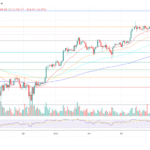
Below is a chart from Blockchain.com that shows the trend in the 7-day average of the global Bitcoin Hashrate.
As is visible in the graph, the 7-day average Bitcoin Hashrate has witnessed a rise recently and is now nearly at the all-time high (ATH). Thus, it seems validators are in expansion mode.
While the Hashrate makes a collective measure of the computing power that the miners have attached, these resources never actually work in tandem due to the nature of PoW. This competition is actually what secures the BTC network.
PoW only works, however, as long as participants involved are sufficiently decentralized. If a particular miner was to gain control of the majority of the Hashrate, they can, in theory, alter the blockchain to their will.
Today, Bitcoin has grown so much that a 51% hack is extremely hard to pull off. Even so, it isn’t outright impossible. One threat to BTC’s decentralization comes in the form of mining pools, groups where individual miners coalesce to get a better shot at earning revenue.
And this is where the current concern lies: two pools are sitting on more than 51% of the Bitcoin Hashrate.
As data from Hashrate Index shows, Foundary USA and AntPool currently have 33.6% and 17.9% of the BTC mining power, respectively. Combined, they make up for 51.5% of the global Hashrate.
Though, while this may be true, an attack should still be unfeasible. As mentioned before, these pools are still made up of individual miners, each of which need to be coordinated to pull off a takeover. Beyond the logistical problem, any successful attack would crash the Bitcoin price and directly hurt the miners involved.
At the time of writing, Bitcoin is trading around $113,700, down almost 6% over the last week.