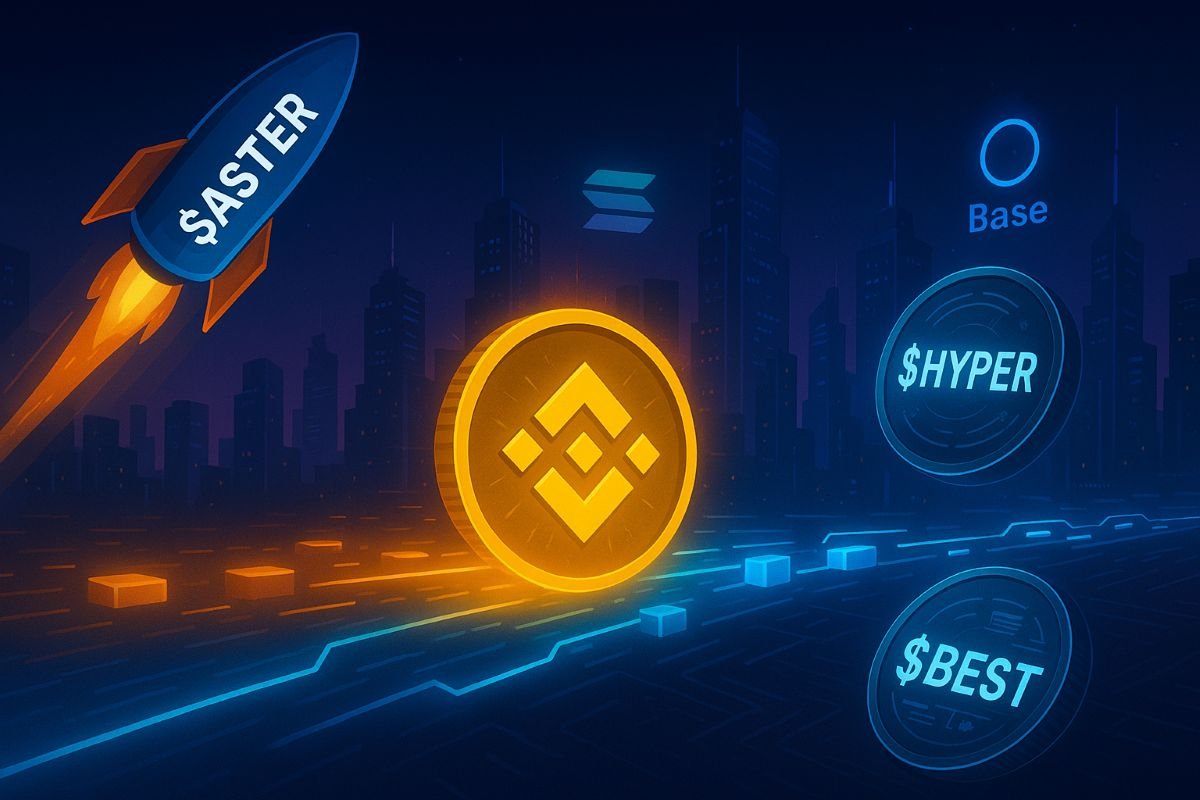
No one expected $ASTER to surge 2,400% in a month. The native token of the up-and-coming DeFi perpetual futures exchange is experiencing phenomenal growth.
But BNB Chain, the base blockchain for $ASTER, wants to double-down on the move, and is making a decisive play to solidify its position in the increasingly aggressive on-chain exchange landscape.
This isn’t BNB Chain’s first attempt at cost reduction. In April 2024, the network trimmed gas fees from 3 Gwei down to 1 Gwei. A few months later, in May, it went further to 0.1 Gwei, slashing transaction costs by around 75%.
The reasoning held that, as long as staking yields remain above a modest threshold, BNB should seek to operate on the lowest gas possible.
A key driver behind this shift is how the composition of activity on BNB has transformed. At the start of 2025, trading-related transactions accounted for roughly 20% of operations. By mid-year, that figure had jumped to about 67%.
And correspondingly, the BNB chain has seen TVL grow over the past months.
The competitive pressure is already mounting from on‐chain exchanges. Aster, a decentralized exchange built on BNB, shot up in recent days.
Aster’s dominant performance shows where the market could be headed – and BNB wants more of it. But the road forward is delicate; lowering fees puts pressure on validator rewards and network economics. The challenge for BNB is to balance:
BNB Chain’s success hinges on matching or outcompeting chains like Solana or Base, setting cost, speed, and liquidity benchmarks that compel users to stay.
Being a presale, though, the price will increase in stages, while the APY decreases as more tokens are staked. So the clock is ticking if you want to get in early.
Aster ($ASTER) roared out of nowhere with its performance post-launch. Now it has to follow through. While consecutive 2,400% months are unlikely, the steady influx of TVL (currently $1.39B) bodes well for Aster’s near-term performance.
Recap: BNB Chain’s initiative to slash fees and speed up block times may reinforce its position as a go-to platform for decentralized trading. It signals confidence that the chain can grow by leaning into volume and utility rather than margin alone.