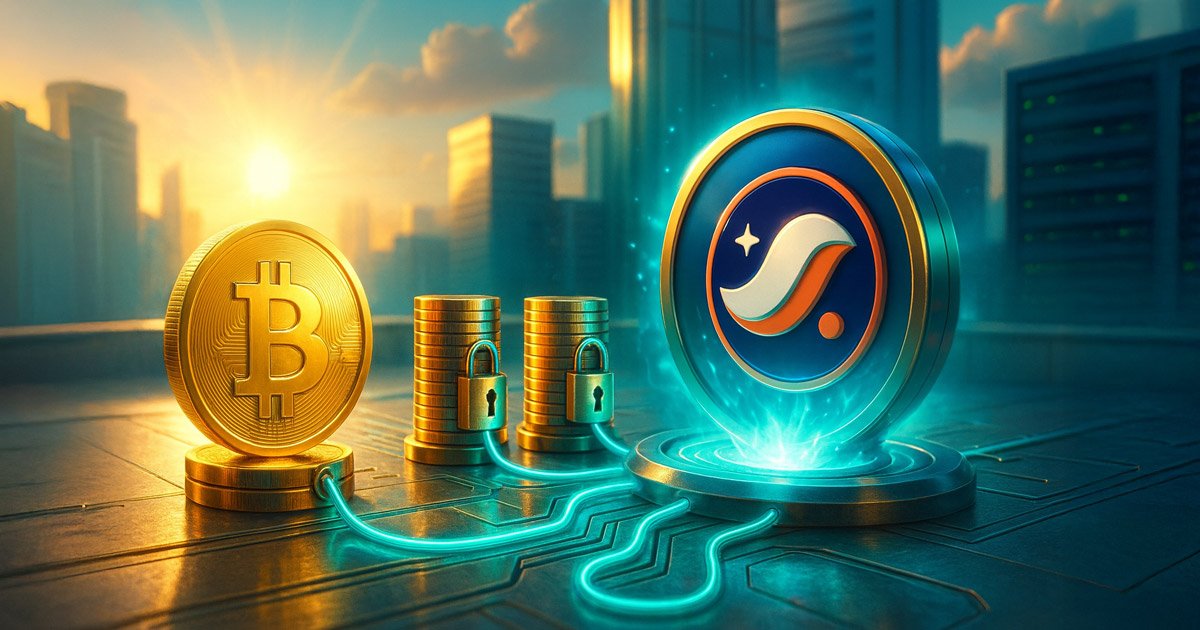
These assets can be integrated into Starknet’s consensus process and are protected by zk-STARK cryptography. Notably, the technology is widely recognized for its speed and post-quantum resistance.
This initiative also ties into Starknet’s broader ambition of becoming an execution layer for Bitcoin. In recent tests, the team used Circle STARKs to verify Bitcoin’s full header chain in 25 milliseconds on a Raspberry Pi, demonstrating real-world performance.
Starknet has also launched decentralized sequencers and is collaborating with BitVM researchers to explore next-generation Bitcoin scaling solutions.
Bitcoin’s equivalent sector is comparatively small, at approximately $2.5 billion, with only 58,500 BTC in circulation.
Since BTC is considered relatively lower-risk than most digital assets, investors typically accept slimmer returns. That dynamic makes BTC an efficient complement to STRK, Starknet’s native token, because securing the network with Bitcoin can be less costly than relying solely on STRK.
Developers argue that this design could initiate a reinforcing cycle as more Bitcoin is transferred to Starknet, thereby increasing liquidity and network security.
This increased liquidity makes Starknet’s ecosystem more appealing to builders and asset holders, which in turn increases STRK participation. At the same time, the higher STRK involvement boosts the overall reward pool, making Bitcoin staking more attractive and drawing even more BTC into the system.