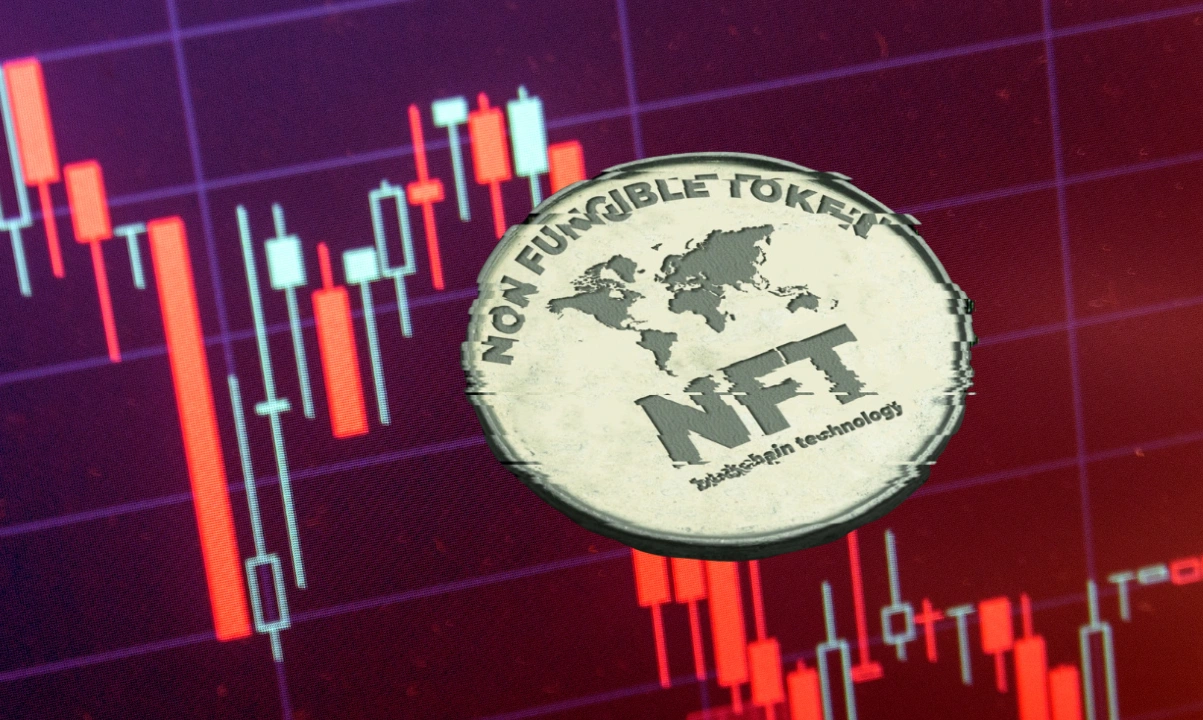
NFT trading has taken a significant downturn, with overall market volume dropping 66% from its January peak. After a strong start to the year driven by rising digital art sales, metaverse excitement, and renewed investor interest, the NFT market is now facing major challenges. The sharp decline highlights shifting market sentiment as trading activity, floor prices, and overall demand fall across most major NFT collections.
Experts attribute the slowdown to several factors, including declining crypto prices, reduced speculation, macroeconomic uncertainty, and limited new user growth in the NFT sector. Many traders who entered during the peak months are now adopting a wait-and-see approach as volatility increases and liquidity thins out. Even top-tier collections like Bored Ape Yacht Club, Azuki, and CryptoPunks have experienced drops in trading volume, reflecting broader market fatigue.
In addition to waning investor enthusiasm, the NFT space is also grappling with concerns about utility, long-term value, and oversaturation. With thousands of new projects launching monthly—many lacking innovation or community support—buyers are becoming more cautious. Market analysts suggest that only projects with strong utility, real-world applications, or established branding will be able to sustain demand during periods of decline.
Despite the downturn, industry supporters remain optimistic about the future of NFTs. Use cases such as digital identity, gaming assets, tokenized art, membership passes, and real-world asset representation continue to expand. Major brands and tech companies are still exploring NFT integrations, which could help revitalize interest in the coming months.
For now, the 66% drop serves as a clear indication that the NFT market is maturing and moving away from speculative hype. As the ecosystem evolves, traders and creators will need to focus on long-term value and innovation rather than short-term profit cycles. Whether this slowdown marks a temporary correction or a more sustained shift in the NFT landscape, it underscores the importance of adapting to changing market dynamics.