


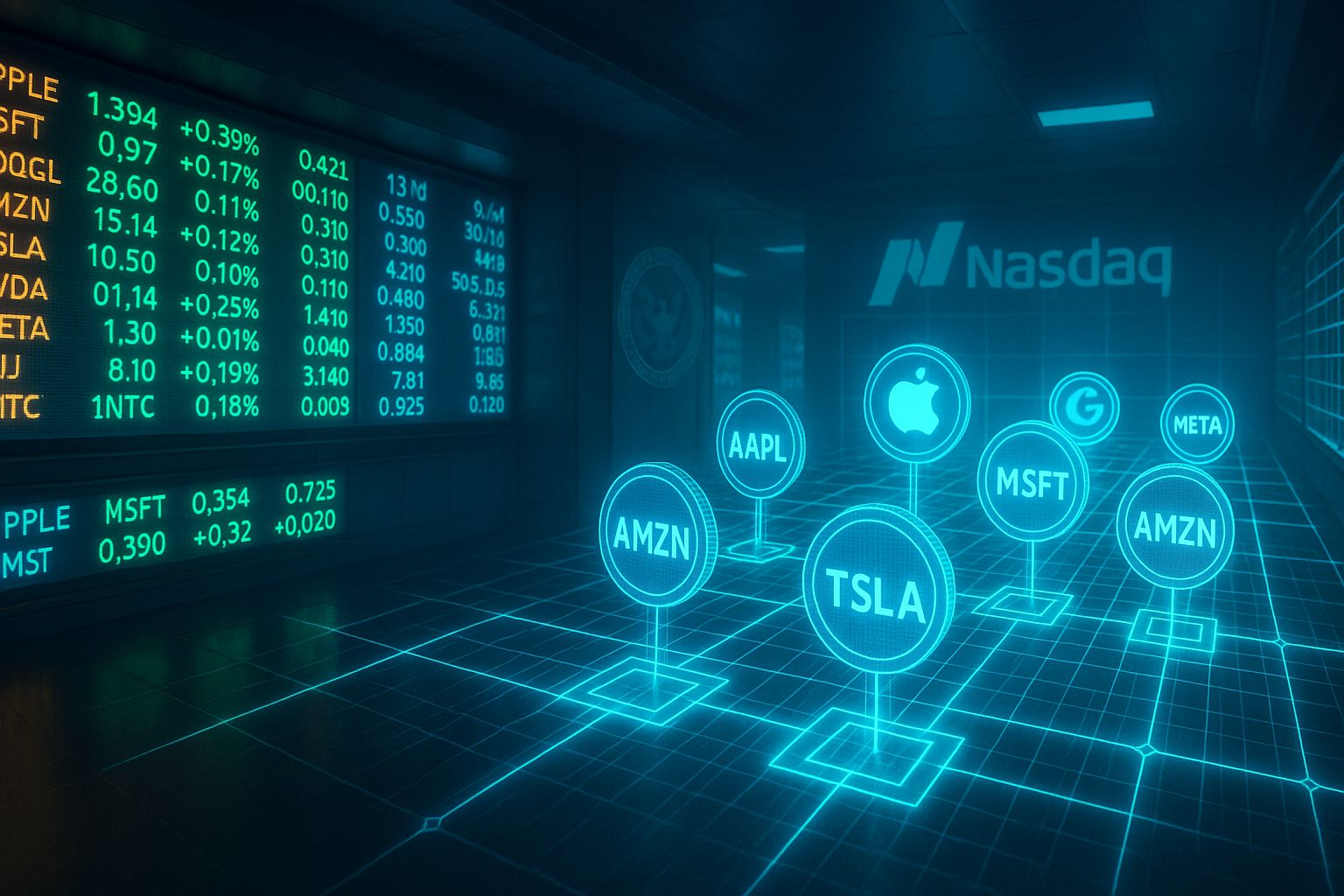
Nasdaq is accelerating its entry into blockchain-powered markets, and the exchange’s head of digital assets has now outlined why tokenized stocks are becoming a core strategic priority. As global demand for digital financial products grows, Nasdaq aims to bridge traditional markets with the emerging world of tokenized assets. According to the company’s digital asset leadership, tokenized stocks offer a more efficient, transparent, and globally accessible structure for trading securities—one that could reshape capital markets in the coming decade.
Nasdaq’s initiative focuses on enabling fractional ownership, faster settlement, and 24/7 global access to equities using blockchain infrastructure. Tokenizing traditional stocks—such as Apple, Tesla, or Amazon—would allow investors to trade these assets around the clock without being tied to conventional market hours. This shift could potentially unlock trillions in liquidity, especially for international traders and emerging markets where access to U.S. equities is limited or costly.
The exchange emphasizes that the move is not about replacing traditional securities but modernizing their infrastructure. By using blockchain-based settlement, Nasdaq aims to reduce reliance on intermediaries, lower transactional friction, and improve transparency. Settlement cycles, which currently span two days under the T+2 standard (recently shifted to T+1), could effectively occur in real time. This would reduce counterparty risk and dramatically increase operational efficiency for brokers and clearing entities.
In addition, tokenized assets could offer new market structures such as programmable compliance, automated corporate actions, and enhanced auditability. Nasdaq’s digital asset team has expressed particular interest in how smart contracts can streamline dividends, voting rights, and shareholder registry tracking—all of which remain cumbersome under current legacy systems.
Regulation remains a central focus. Nasdaq’s leadership highlighted that the U.S. market is still navigating how tokenized stocks fit into securities laws, custody frameworks, and investor protections. While many offshore exchanges already offer synthetic or wrapped versions of tokenized equities, Nasdaq is committed to building a fully compliant, regulated environment aligned with SEC standards. This is one of the key reasons why the exchange is investing heavily in blockchain research, strategic partnerships, and robust infrastructure designed for institutional-grade trading.
The push also comes as global competitors embrace tokenized markets. Exchanges in Europe, the Middle East, Singapore, and Hong Kong have already begun experimenting with tokenized bonds, funds, and equities. Nasdaq believes the U.S. must remain a leader in financial innovation, and integrating tokenization into its offerings is a step toward safeguarding America’s dominance in global capital markets.
Nasdaq’s head of digital assets sees tokenized stocks as part of a long-term transformation of financial markets—similar to the rise of electronic trading in the late 1990s and early 2000s. As investor preferences evolve and blockchain adoption grows, tokenized securities could become a standard offering across major exchanges. For Nasdaq, the goal is clear: build the infrastructure today to support the markets of tomorrow.
This strategic push signals that tokenized stocks are moving from concept to reality, and Nasdaq aims to be at the forefront of this transition.






