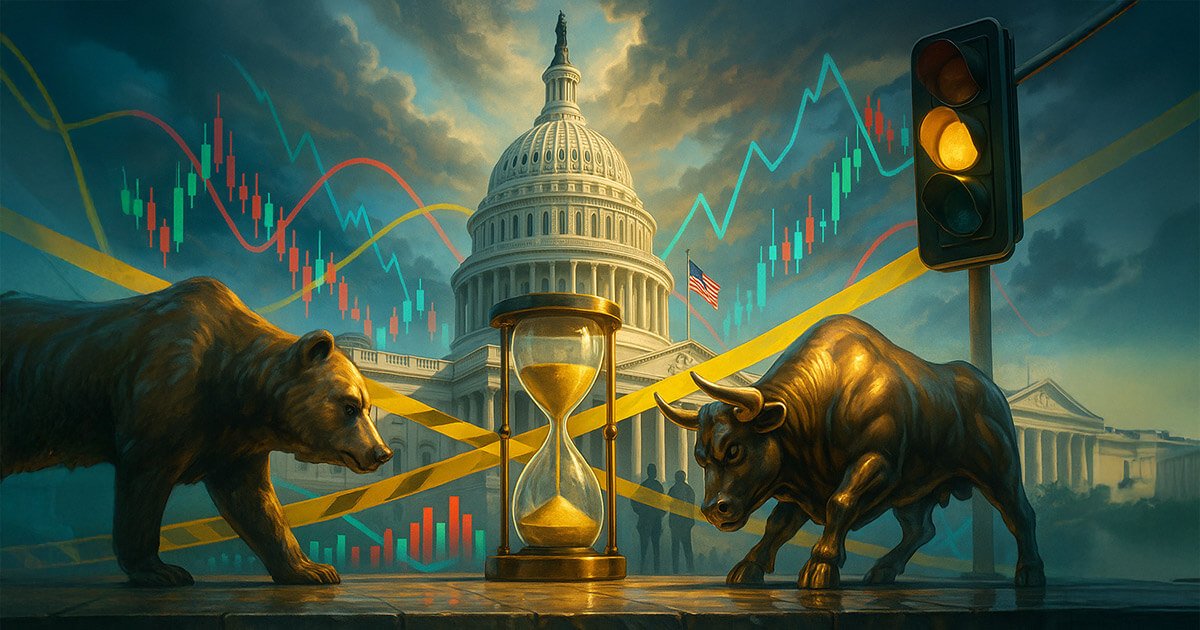
If a U.S. government shutdown occurs, it will immediately halt salaries for hundreds of thousands of federal employees. It will delay procedures like passport processing, disrupt national parks, and potentially impact social programs like Supplemental Nutrition Assistance and healthcare funding.
Crucial economic reports used by investors to assess market trends may be postponed, causing increased volatility and limited visibility for finance professionals.
This standoff is unique because both major parties see political upside in refusing to compromise. Analysts have warned that the likelihood of resolution is fading as the deadline approaches. A U.S. government shutdown could last from days to weeks, depending on how quickly lawmakers return to negotiations.
“In the past, US government shutdowns have resulted in market correction, and this is why people are panicking.”
Regulatory agencies such as the SEC and CFTC may slow or halt non-essential activities, delaying new ETF decisions, enforcement actions, and policy guidance for digital assets.
A stronger U.S. dollar, often seen as a safe haven during periods of global uncertainty, also impacts risk assets like Bitcoin, making them less attractive to buyers and reducing overall demand. Institutional investors, in response, have pivoted towards short-duration credit, stablecoins, and real assets to manage volatility during the shutdown risk cycle.
A U.S. government shutdown is more likely than ever as political gridlock persists in Washington. The effects would be felt across government agencies and services, with widespread economic uncertainty spilling over into financial and crypto markets.
For digital assets, ongoing volatility, regulatory delays, and defensive strategies may continue until political compromise is reached and government operations resume. All eyes are on Washington and the October 1 deadline, which may not be the best start to “Uptober” that crypto investors are hoping for.